
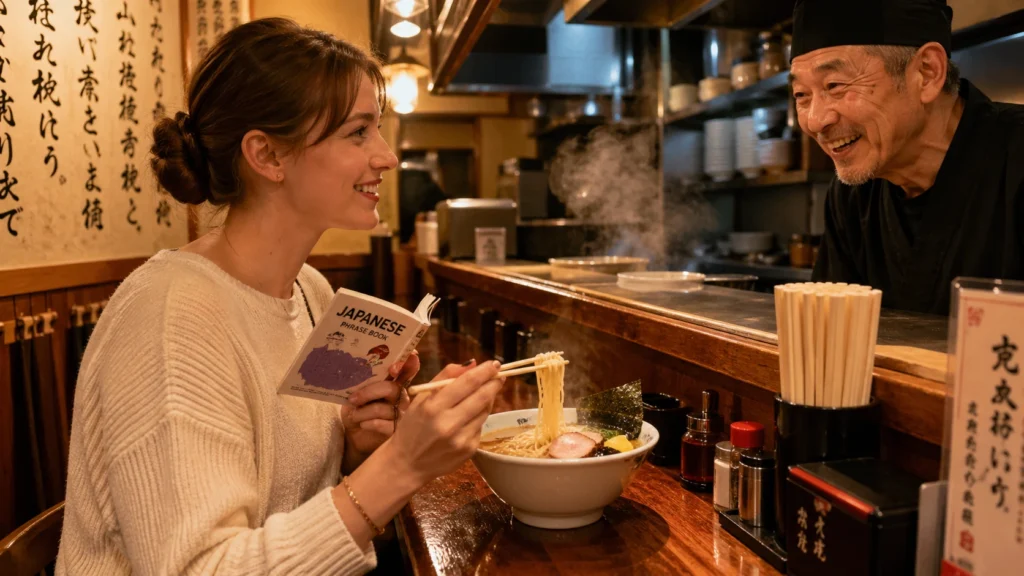
Ordering food in Japan doesn’t require fluency—it requires confidence and the right phrases. Most travelers panic at the restaurant counter, pointing awkwardly at menus they can’t read. But here’s the secret: Japanese servers are incredibly helpful, and you only need 15 well-placed phrases to navigate any restaurant like a pro. This guide gives you the exact words to say, real dialogue examples you can steal, and the cultural know-how to eat confidently anywhere in Japan.
Why Ordering Food in Japan is Easier Than You Think
Japanese restaurants are built for tourists. Staff expect language barriers and are patient, helpful, and genuinely want you to have a good experience. The key is showing respect through basic phrases and effort—even if your pronunciation isn’t perfect. You’ll be amazed how far “すみません” (sumimasen – excuse me) and a smile will get you.
The 5 Essential Phrases Before You Order
These phrases set the tone and show respect. Master these first.
Phrase #1: “すみません” (Sumimasen) – Excuse Me
Pronunciation: SOO-mee-mah-sen
When to use: To get the server’s attention, to ask questions, to apologize for mistakes
Why it matters: This is the politest way to get attention. Using it shows respect and will get you better service.
Example: “すみません、メニューをください。” (Sumimasen, menyu wo kudasai) – “Excuse me, could I have a menu, please?”
Phrase #2: “メニューをください” (Menyu wo kudasai) – May I Have a Menu?
Pronunciation: MEH-nyu-oo wo KOO-dah-sigh
When to use: When you first sit down
Why it matters: Shows you’re ready to order and you’re making an effort
Many restaurants will automatically offer a menu, but asking in Japanese is respectful and appreciated.
Phrase #3: “英語のメニューはありますか?” (Eigo no menyu wa arimasu ka?) – Do You Have an English Menu?
Pronunciation: AY-go no MEH-nyu wa AH-ree-mah-su kah?
When to use: Immediately after requesting the menu
Why it matters: No shame in asking. Most restaurants have English menus available
If they don’t, don’t panic—that’s when these phrases come in handy.
Phrase #4: “これは何ですか?” (Kore wa nan desu ka?) – What is This?
Pronunciation: KOH-reh wa nahn DEH-su kah?
When to use: When you see something on the menu you don’t recognize
Why it matters: Servers love explaining food. They’ll tell you exactly what it is and whether you’d like it
Phrase #5: “おすすめは何ですか?” (Osusume wa nan desu ka?) – What do You Recommend?
Pronunciation: OH-soo-soo-meh wa nahn DEH-su kah?
When to use: When you’re overwhelmed by choices
Why it matters: Servers will recommend their best dishes. You’ll often discover amazing dishes this way
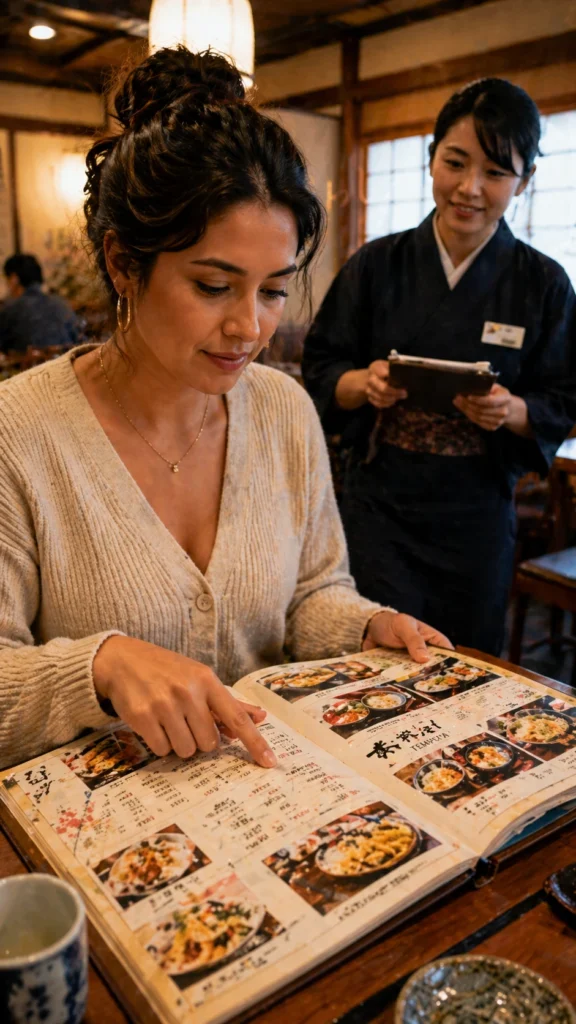
10 Restaurant Vocabulary Words You Actually Need
Stop memorizing 100 words. These 10 will handle 80% of your dining situations.
| Japanese | Pronunciation | English | When You Use It |
|---|---|---|---|
| 水 (mizu) | MEE-zoo | Water | “Mizu onegaishimasu” – water, please |
| 熱い (atsui) | AH-tsoo-ee | Hot (temperature) | Warning you about hot dishes |
| 辛い (karai) | KAH-rah-ee | Spicy | To ask if something is spicy |
| 甘い (amai) | AH-mah-ee | Sweet | To describe flavors |
| 生 (nama) | NAH-mah | Raw | For sushi, sashimi, or raw preparations |
| 焼き (yaki) | YAH-kee | Grilled | For grilled dishes (yakitori, okonomiyaki) |
| 揚げ (age) | AH-geh | Fried | For fried dishes (tempura, karaage) |
| スープ (supu) | SUU-poo | Soup | Obvious, but useful |
| デザート (dezāto) | DEH-zah-toh | Dessert | For sweet treats |
| アレルギー (alergī) | AH-ler-gu-ee | Allergy | Critical if you have food allergies |
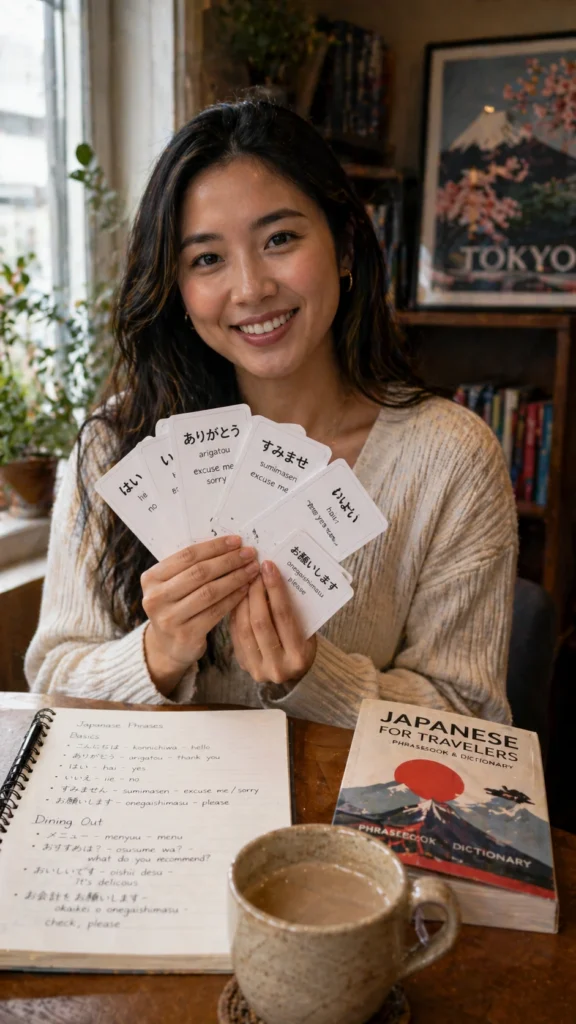
Real Dialogue Examples You Can Steal
These are actual conversations you’ll have. Bookmark this section.
Dialogue #1: Basic Restaurant Entry
You arrive at a restaurant
Server: “いらっしゃいませ!何名様ですか?” (Irasshai-mase! Nan meisama desu ka?)
Translation: “Welcome! How many people?”
You: “二人です。” (Ni nin desu.)
Translation: “Two people.”
Server: “こちらへどうぞ。” (Kochira he dōzo.)
Translation: “This way, please.”
They’ll seat you. You’re already winning.
Dialogue #2: Ordering Food (The Classic)
You: “すみません、メニューをください。” (Sumimasen, menyu wo kudasai.)
Translation: “Excuse me, could I have a menu?”
Server: “かしこまりました。” (Kashikomarimashita.)
Translation: “Right away.”
They bring menu. You look confused.
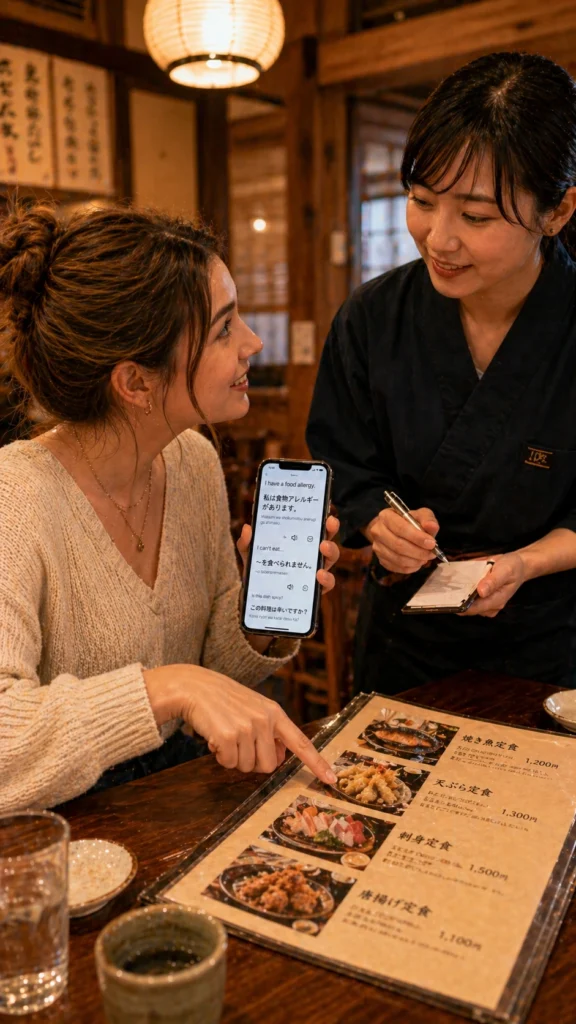
You: “これは何ですか?” (Kore wa nan desu ka?) pointing at menu item
Translation: “What is this?”
Server: “これは鶏の唐揚げです。とても人気があります。” (Kore wa tori no karaage desu. Totemo ninki ga arimasu.)
Translation: “This is fried chicken. It’s very popular.”
You: “辛いですか?” (Karai desu ka?)
Translation: “Is it spicy?”
Server: “いいえ、辛くありません。” (Iie, karakuarimasen.)
Translation: “No, it’s not spicy.”
You: “じゃあ、これをください。” (Jaa, kore wo kudasai.)
Translation: “Then I’ll have this.”
Server: “かしこまりました。” (Kashikomarimashita.)
Translation: “Right away.”
You just ordered in Japanese. You’re amazing.
Dialogue #3: Allergies (Critical)
You: “すみません。私はピーナッツにアレルギーがあります。” (Sumimasen. Watashi wa pīnattsu ni alergī ga arimasu.)
Translation: “Excuse me. I have a peanut allergy.”
Server: “かしこまりました。確認させていただきます。” (Kashikomarimashita. Kakunin sasete itadakimasu.)
Translation: “Understood. I will verify this.”
They take this seriously. Very seriously. Your safety is their priority.
Dialogue #4: Special Requests
You: “塩辛くしないでください。” (Shio karakushimai de kudasai.)
Translation: “Please don’t make it too salty.”
OR
You: “野菜をたくさんください。” (Yasai wo takusan kudasai.)
Translation: “Please give me lots of vegetables.”
Simple requests go a long way. Servers will remember you.
Dialogue #5: The Check / Payment
You: “すみません、お勘定をお願いします。” (Sumimasen, o-kanjō wo onegai shimasu.)
Translation: “Excuse me, could I have the check, please?”
Server: “かしこまりました。” (Kashikomarimashita.)
Translation: “Right away.”
They bring the check. In Japan, you don’t tip. Leave the exact amount.
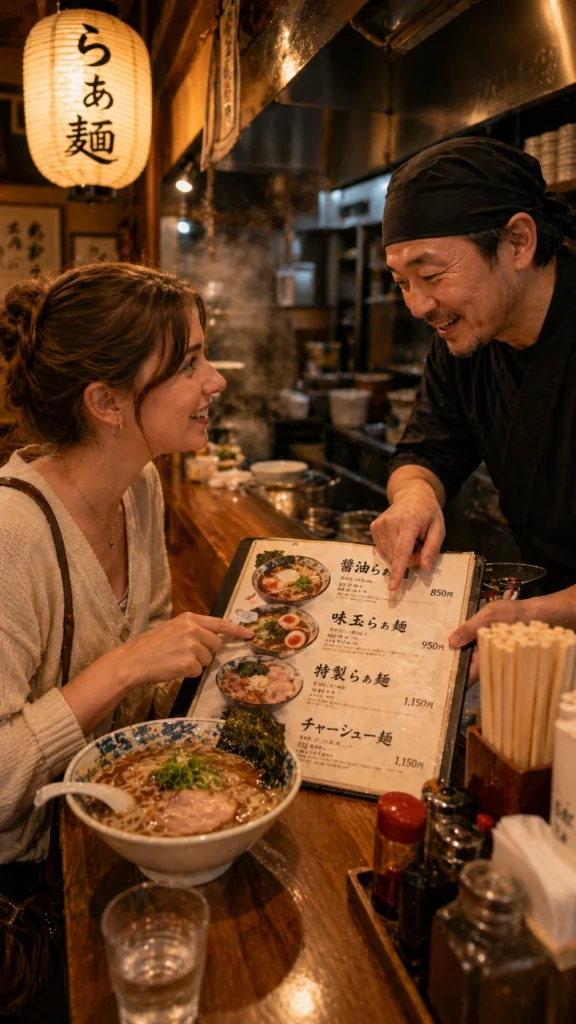
Cultural Dining Etiquette That Matters
Understanding these customs prevents awkward moments and shows respect.
The Slurping Rule
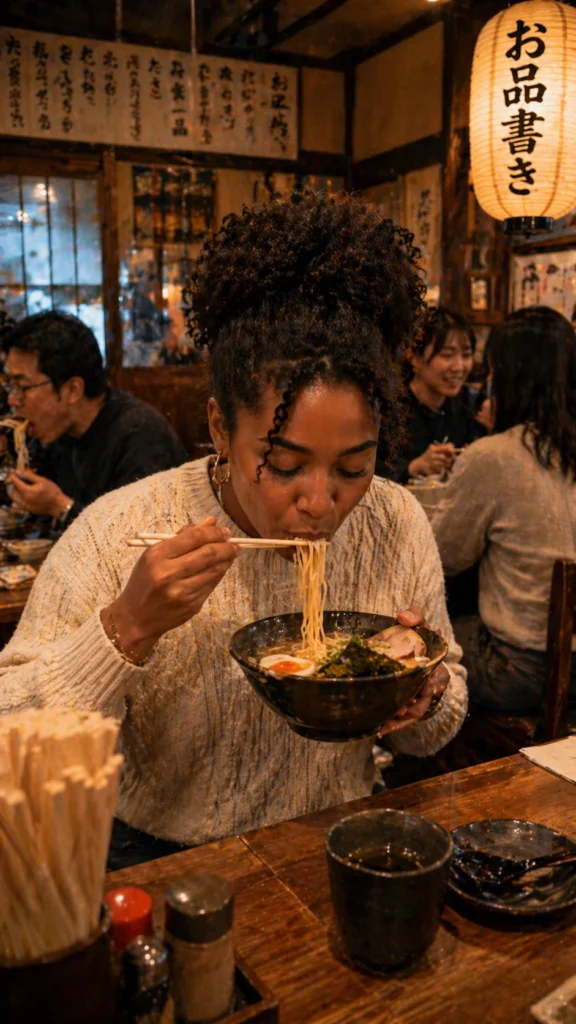
Slurping noodles is ENCOURAGED. It’s not rude—it’s expected. Loud, enthusiastic slurping means you’re enjoying your food. Do it.
Chopstick Taboos (Avoid These)
- Never stick chopsticks upright in rice – This resembles a funeral ritual
- Never pass food chopstick-to-chopstick – Also funeral-related
- Never use chopsticks to point – Considered rude
The Gari Cleanse
That pickled ginger (gari) next to your sushi? Use it between different pieces to cleanse your palate. It’s part of the experience.
Saying “Itadakimasu” Before You Eat
“いただきます” (Itadakimasu) – “I humbly receive”
Say this before eating. It shows gratitude and respect for the chef and the ingredients. Servers notice and appreciate this.
Saying “Gochisousama” After You Eat
“ごちそうさま” (Gochisousama) – “That was a treat”
Say this after finishing. It’s polite and lets the server know you’re satisfied.
Restaurant Types & What to Expect
Different restaurants have different vibes. Here’s what you’ll encounter.
Ramen Shop (ラーメン屋)
- Ordering: Usually at a vending machine (order, pay, get ticket, sit down)
- Vibe: Fast, casual, solo-friendly
- Phrase: “ラーメン一杯ください。” (Ramen ippai kudasai) – “One bowl of ramen, please”
Sushi Restaurant (寿司屋)
- Ordering: Counter-style or table service (ask for recommendations)
- Vibe: Formal, intimate, interactive with chef
- Phrase: “おまかせください。” (Omakase kudasai) – “Chef’s choice, please”
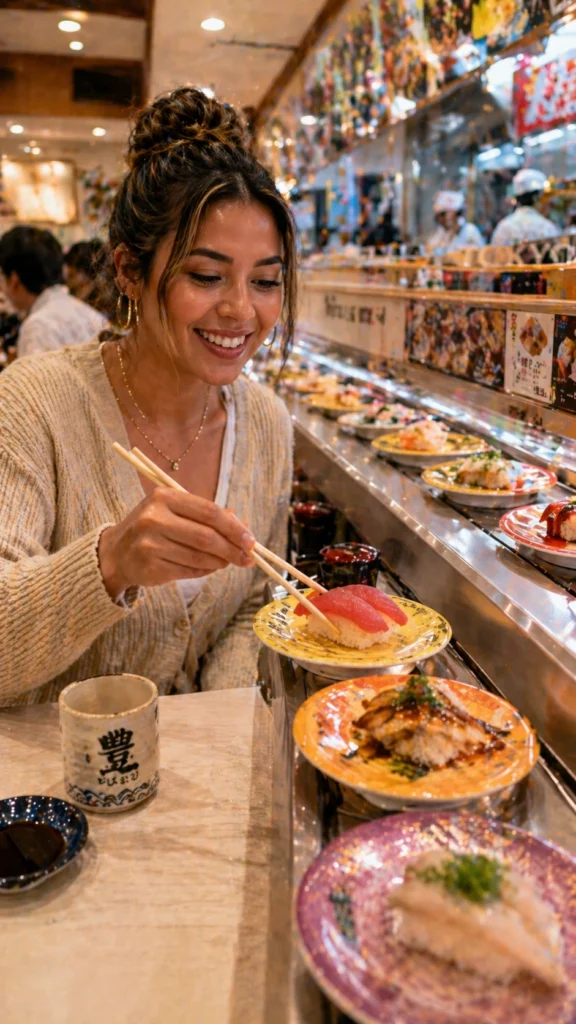
Conveyor Belt Sushi (回転寿司)
- Ordering: Grab plates from the belt as they pass, order specials at counter
- Vibe: Fun, casual, interactive
- Phrase: “これください。” (Kore kudasai) – “This one, please”
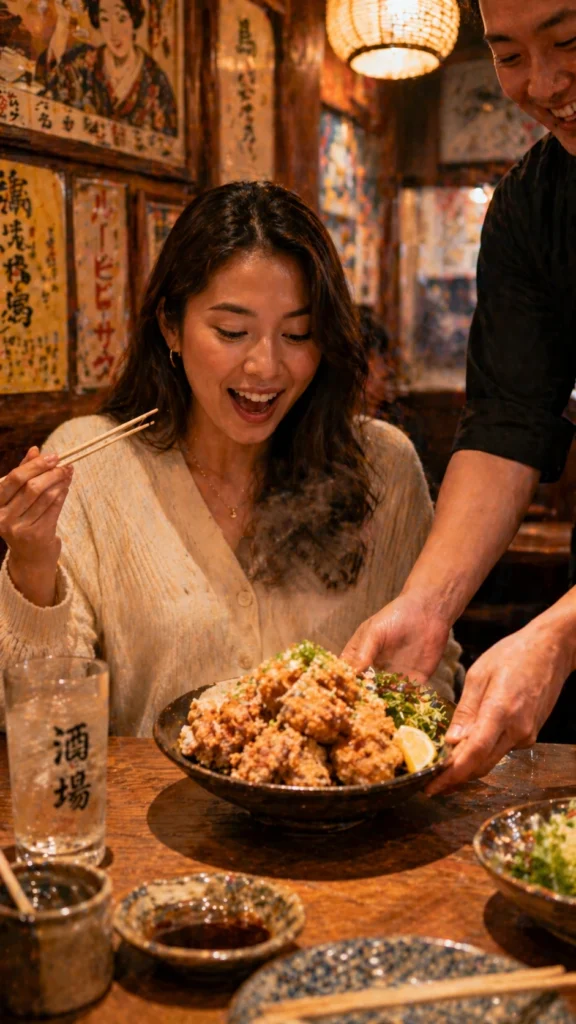
Izakaya (居酒屋 – Japanese Pub)
- Ordering: Table service, multiple small plates
- Vibe: Social, lively, evening focus
- Phrase: “何がおすすめですか?” (Nani ga osusume desu ka?) – “What’s recommended?”
Okonomiyaki (お好み焼き – Savory Pancake)
- Ordering: Table service, cooked in front of you
- Vibe: Interactive, fun, casual
- Phrase: “豚玉をください。” (Butayaki kudasai) – “One okonomiyaki with pork, please”
Common Menu Items Explained
You’ll see these on every menu. Here’s what they actually are.
Main Dishes
- カツ丼 (Katsudon) – Breaded fried pork over rice (amazingly delicious)
- 天丼 (Tendon) – Tempura vegetables and shrimp over rice
- 親子丼 (Oyakodon) – Chicken and egg over rice (literally “parent and child”)
- 焼き鳥 (Yakitori) – Grilled chicken skewers (order multiple)
- 唐揚げ (Karaage) – Japanese fried chicken (crispy, savory perfection)
- とんかつ (Tonkatsu) – Breaded fried pork cutlet
Noodle Dishes
- ラーメン (Ramen) – Wheat noodles in broth (addictive)
- うどん (Udon) – Thick wheat noodles (filling, comforting)
- そば (Soba) – Thin buckwheat noodles (lighter than ramen)
- 焼きそば (Yakisoba) – Stir-fried wheat noodles (crispy, savory)
Rice Dishes
- 寿司 (Sushi) – Rice with raw fish (obviously)
- 天ぷら (Tempura) – Battered and fried vegetables and shrimp (light, crispy)
- お好み焼き (Okonomiyaki) – Savory pancake with cabbage and meat
Phrases for Tricky Situations
These come in handy when things get confusing.
“This is Too Spicy”
“これは辛すぎます。” (Kore wa karai sugimasu.)
Pronunciation: KOH-reh wa KAH-rah-ee SUU-gee-mah-su
Response: They’ll either bring you water/rice, or offer to replace it.
“I’m Vegetarian”
“私はベジタリアンです。肉はいりません。” (Watashi wa bejitarian desu. Niku wa irimasen.)
Pronunciation: WAH-tah-shee wa BEH-jee-tah-ree-ahn DEH-su. NEE-koo wa EE-ree-mah-sen.
Translation: “I’m vegetarian. I don’t eat meat.”
“Is This Cooked?”
“これは加熱されていますか?” (Kore wa kanetsu sarete imasu ka?)
Pronunciation: KOH-reh wa KAH-neh-tsu SAH-reh-teh EE-mah-su kah?
“Check Please (Politely)”
“すみません、お勘定をお願いします。” (Sumimasen, o-kanjō wo onegai shimasu.)
Pronunciation: SOO-mee-mah-sen, OH-kahn-joh wo OH-neh-guy shee-mah-su
“This Is Delicious”
“おいしいです!” (Oishii desu!)
Pronunciation: OH-ee-shee EE DEH-su
Say this and the chef will smile. They work hard and appreciate genuine compliments.
Common Menu Phrases & Reading Symbols
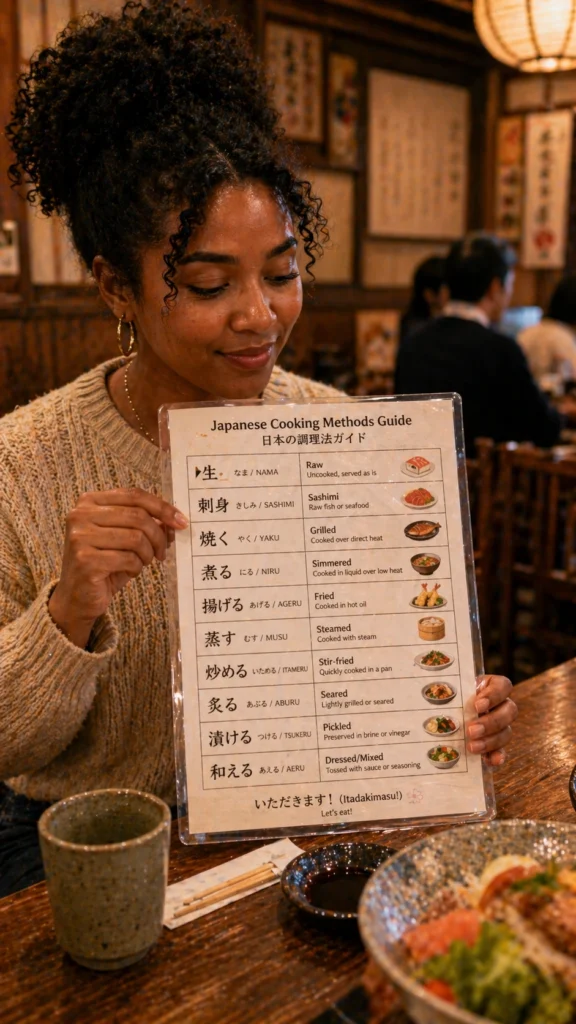
You’ll see these written on menus constantly.
Cooking Methods (How It’s Prepared)
- 焼き (Yaki) – Grilled
- 揚げ (Age) – Fried
- 蒸す (Musu) – Steamed
- 煮込み (Nikomi) – Simmered
- 生 (Nama) – Raw
- 炒める (Itameru) – Stir-fried
Proteins (What It Is)
- 鶏 (Tori) – Chicken
- 豚 (Buta) – Pork
- 牛 (Ushi) – Beef
- 魚 (Sakana) – Fish
- 海老 (Ebi) – Shrimp
- 卵 (Tamago) – Egg
Common Descriptors
- 新鮮 (Shinsen) – Fresh
- 自家製 (Jikasei) – Homemade
- 季節 (Kisetsu) – Seasonal
- 特別 (Tokubetsu) – Special
- 人気 (Ninki) – Popular
Frequently Asked Questions
Should I Learn to Read Japanese Characters?
Short answer: No. Learn hiragana if you have time (15 minutes), but it’s not essential. Most restaurants have pictures, English menus, or Google Translate. Point and ask questions—that’s always acceptable.
What If I Completely Freeze and Can’t Remember Phrases?
Point and smile. Seriously. Photo of dish + smile = Japanese server will help you. They’re incredibly patient. Everyone freezes sometimes, even experienced travelers.
Is Tipping Expected in Japan?
No. Never tip. It’s not expected and can actually be offensive. Leave the exact amount on the bill. That’s it.
What If There’s No English Menu?
Use Google Translate camera feature. Point your phone at the menu and it translates in real-time. It’s 80% accurate and helpful enough to figure out what you’re eating.
Can I Ask to Modify Dishes?
Yes, politely. Use “〜でください” (de kudasai) – “please” or “〜抜きで” (nuki de) – “without.” Example: “唐辛子抜きでお願いします。” (Togarashi nuki de onegai shimasu) – “Without chili pepper, please.”
What If I Don’t Like What I Ordered?
Politely tell them. “すみません、これは私の好みではありません。別のものをいただけますか?” (Sumimasen, kore wa watashi no konomi dewa arimasen. Betsu no mono wo itadakemasu ka?) – “Excuse me, this isn’t to my taste. Could I try something else?” Most restaurants will replace it without issue.
Is It Okay to Eat Alone in Restaurants?
Absolutely. Solo dining is normal and comfortable in Japan. You’ll often find counter seating at ramen shops and sushi restaurants designed for solo diners. Embrace it.
How Do I Order More Than One Dish?
Simply say the number before the dish name.
“二つラーメンをください。” (Futatsu ramen wo kudasai.) – “Two bowls of ramen, please.”
Conclusion: You’ve Got This
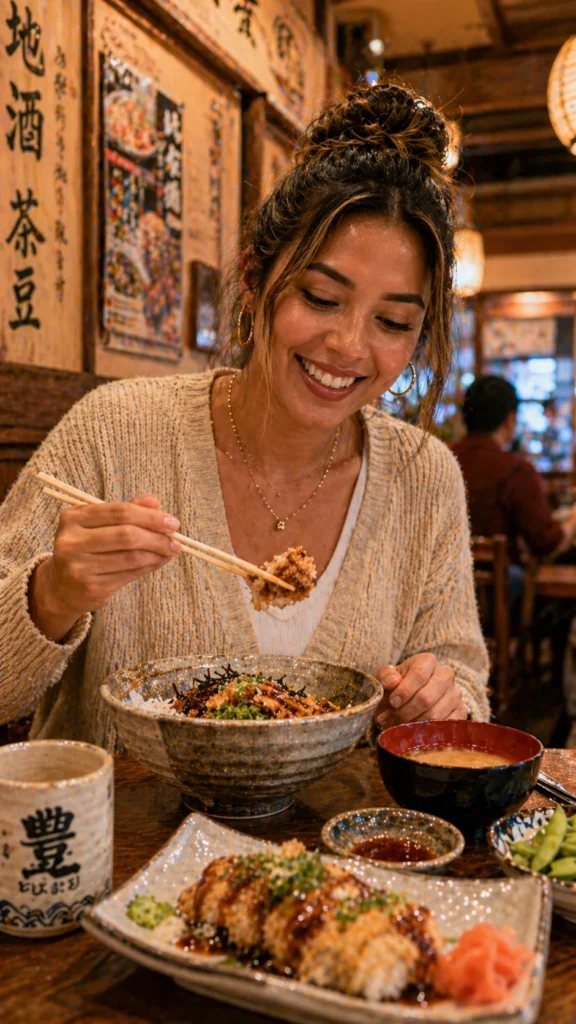
The beautiful truth about ordering food in Japan is this: everyone—staff, customers, and other travelers—wants you to succeed. Japanese people are incredibly welcoming to visitors making an effort with their language.
You don’t need perfect pronunciation. You don’t need fluency. You just need these 15 phrases, a smile, and confidence. The moment you say “sumimasen” and point at something on the menu, you’ve already impressed everyone around you.
Your first restaurant experience in Japan will be nerve-wracking. Your fifth will be casual. By your tenth, you’ll be giving tips to other travelers. Start with these phrases, practice the pronunciation, and remember: every Japanese speaker started exactly where you are.
Download your restaurant phrases cheat sheet, take it with you on your trip, and eat your way through Japan with confidence. The adventure starts now.