
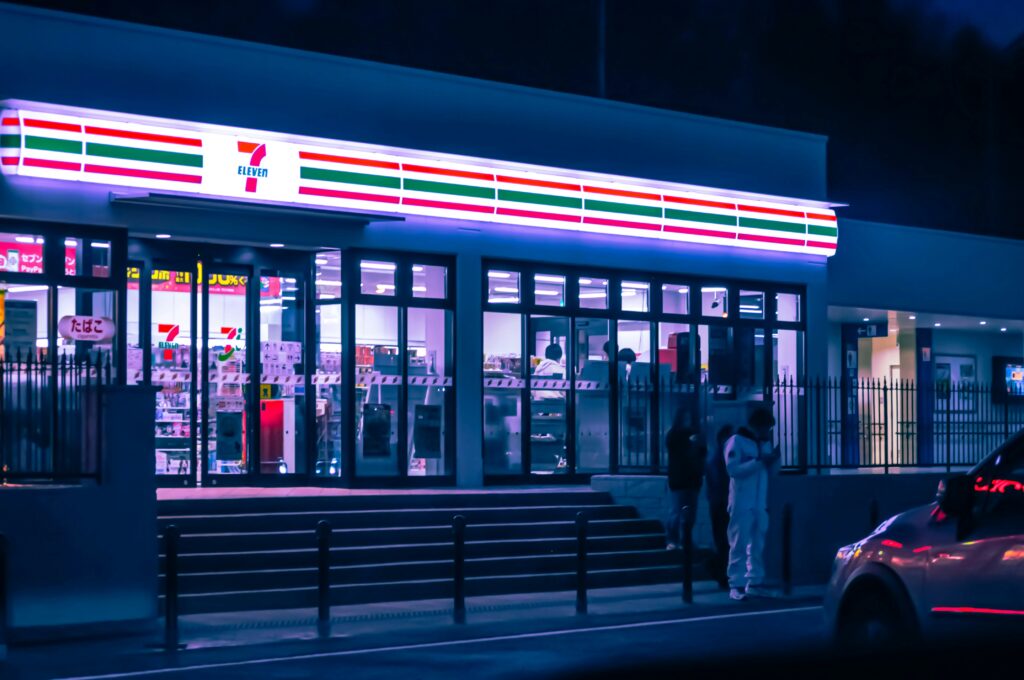
Let me guess — you’ve seen the travel influencers raving about Japan, and somewhere between the cherry blossom photos and ramen close-ups, a cold wave of panic hit you: “Can I actually afford to eat there?” Spoiler: not only can you afford it, you can eat better than most tourists for a fraction of what they spend. The secret? Japan’s convenience stores — and no, I’m not joking.
Wait, Convenience Stores? Seriously?
I know what you’re thinking. Convenience store food? That sounds like a sad desk lunch in a fluorescent-lit office, not a travel highlight. But Japan’s konbini (the local word for convenience stores) are genuinely nothing like what you have back home.
Think of them less as a place to grab stale chips and more as a fully-equipped kitchen that’s open 24/7, staffed by people who actually care about food quality. Fresh onigiri made daily. Hot bento boxes. Proper ramen. Freshly brewed coffee for ¥110 (~$0.75). This isn’t convenience food — it’s just food that happens to be convenient. Big difference.
The Three Chains You Need to Know
Japan’s konbini scene is dominated by three players, and each has its own personality. Here’s a quick cheat sheet:
7-Eleven Japan
Best for: Freshness, onigiri variety, and desserts. Their tuna mayo onigiri (¥130–¥150) is genuinely iconic. Drip coffee from the machine runs ¥110 and tastes better than most café Americanos I’ve had.
Lawson
Best for: Hot meals and baked goods. The Karaage-kun (5 pieces of fried chicken for ¥260) is dangerously good. Their hot bento boxes run ¥490–¥650, which is around $3.30–$4.40 for a full, proper meal.
FamilyMart
Best for: Value bento and their legendary Famichiki fried chicken (¥230). Their small coffee (FamiMa Coffee, ¥100) is the cheapest decent coffee you’ll find in Japan.
All three are everywhere — and I mean everywhere. In some Tokyo neighborhoods, you’ll pass three konbinis in a single block.
The $12/Day Food Formula (Yes, It Works)
Here’s where it gets genuinely exciting. You can eat three full, satisfying meals a day in Japan for around ¥1,500–¥1,800, which sits comfortably under $12. The Japan on $50 a Day guide breaks this down meal by meal, and the numbers hold up.
Breakfast: ¥400–¥500
Skip the hotel breakfast — budget properties charge ¥500–¥1,000 per person for a buffet that you absolutely do not need. The konbini does it better, faster, and cheaper.
Best breakfast combos:
- The Classic: 2x onigiri (¥130 each) + canned coffee (¥120) = ¥380
- The Filling: Egg salad sandwich (¥230) + banana (¥80) + coffee (¥110) = ¥420
- The Warm-Up: Nikuman pork bun (¥160) + miso soup (¥150) + green tea (¥100) = ¥410
The key hack here? Get your morning coffee from the konbini machine — freshly brewed Americano for ¥100–¥110 vs ¥500+ at a café. That’s a daily saving of ¥390 just on coffee. Over a week, that’s almost ¥2,730 back in your pocket. 🙂
Lunch: ¥500–¥650
Lunchtime is when the bento system really shines. Here’s a tip most tourists never figure out: many konbinis discount hot bentos by 20–30% after 2pm. Look for the yellow discount stickers (called nenbiki) near the hot food section.
Best lunch combos:
- The Worker’s Lunch: Hot bento box (¥498) + canned tea (¥140) = ¥638
- The Noodle Run: Cup ramen/udon (¥230) + onigiri (¥130) + drink (¥100) = ¥460
- The Chicken Combo: Famichiki (¥230) + rice ball (¥130) + iced tea (¥140) = ¥500
FYI, you can ask staff to heat up any refrigerated item for free. Just hand it over and say “Atatamete kudasai” (温めてください). Completely free, every time. A cold bento becomes a hot, satisfying meal in 90 seconds.
Dinner: ¥600–¥700 (or Less)
Dinner is your wildcard. You’ve got two solid routes: go full konbini, or make a quick detour to a gyudon (beef bowl) chain.
Best dinner options:
- Discounted bento (¥350 after 7pm) + miso soup (¥150) + melon pan bread (¥130) = ¥630
- Chilled pasta (¥400) + salad pack (¥180) + tea (¥100) = ¥680
- Yoshinoya beef bowl — standalone, ¥580, and IMO the best value hot meal in all of Japan :/
The Yoshinoya beef bowl deserves its own mention. It’s hot, filling, protein-heavy, open 24/7, and costs ¥580. Three meals a day at gyudon chains like Yoshinoya, Matsuya, or Sukiya runs about ¥1,800 total — a solid budget reset if you’ve overspent on a particularly expensive day.
The Konbini Power Moves Most Tourists Never Figure Out
The Discount Hour Strike
Between 7pm and 9pm, unsold hot bentos and sandwiches get automatic markdown stickers. Stores must sell or discard food made that day. Scout multiple konbinis on the same block and grab the deepest discount. A ¥680 bento regularly drops to ¥350–¥430. That’s nearly half price for the same food.
The Supermarket Synergy
This one’s a bonus move. Japanese supermarkets — Life, Aeon, Ito-Yokado — discount fresh produce, sushi, and bento by 30–50% after 6pm and again near closing (9–10pm). Near closing time, you can eat sushi-grade fish for ¥300–¥400. It’s absurd value. The Japan on $50 a Day guide lists this alongside a full emergency budget repair kit for days when spending blows out.
The Lawson Fridge Raid
Lawson’s refrigerated section is stacked with pre-made salads, tofu blocks, boiled eggs, and edamame — all under ¥200. Boiled egg pack: ¥120 for two. These are perfect high-protein supplements to any carb-heavy main.
The Point Card Compound
Every major konbini has a loyalty app: 7-Eleven (nanaco), Lawson (Ponta), FamilyMart (FamiPay). Scan at every purchase — points are redeemable for free food. On a two-week trip this adds up to ¥300–¥600 in free items. That’s basically a free day of meals.
Konbini vs. Restaurant: The Weekly Math
Let’s be honest about what’s at stake here. Eating at sit-down restaurants every meal in Japan costs ¥1,500–¥3,000 per meal — three restaurant meals a day runs ¥4,500–¥9,000. The konbini system clocks in at ¥1,500–¥1,800 for the whole day.
The weekly difference? Around ¥30,000 (~$200). That’s an extra week of travel. A shinkansen trip. Five nights in a capsule hotel. The math isn’t subtle.
One Phrase That Unlocks Everything
If you take one Japanese phrase with you, make it this:
“Atatamete kudasai” — “Please heat this up.”
Every refrigerated item in the store — pasta, bento, onigiri, soup — can be heated for free at the counter. This single phrase transforms a cold convenience-store lunch into a genuinely hot, satisfying meal. It costs nothing and takes 90 seconds.
For the full phrase toolkit (7 essential phrases), app list, and the complete meal-by-meal breakdown with real yen figures, the Japan on $50 a Day guide is genuinely the most practical resource I’ve found for this kind of trip.
The Bottom Line
Japan doesn’t have to drain your wallet — not even close. The konbini system is one of the most underrated travel tools on the planet, and most tourists walk straight past it looking for a “real” restaurant. Meanwhile, seasoned Japan travelers are eating three excellent meals a day for under $12 and pocketing the difference.
The playbook is simple: breakfast from the konbini machine, a discounted bento at lunch, and either a marked-down evening bento or a ¥580 beef bowl for dinner. Repeat daily. Save thousands.
And if you want the full system — daily budget breakdowns, regional rail pass comparisons, free activity guides city by city, and two complete itineraries with every yen accounted for — grab Japan on $50 a Day. It’s the guide that makes a ¥7,500/day trip actually feel like a trip, not a budget drill.
Now stop worrying about the food costs and start planning the fun stuff.