
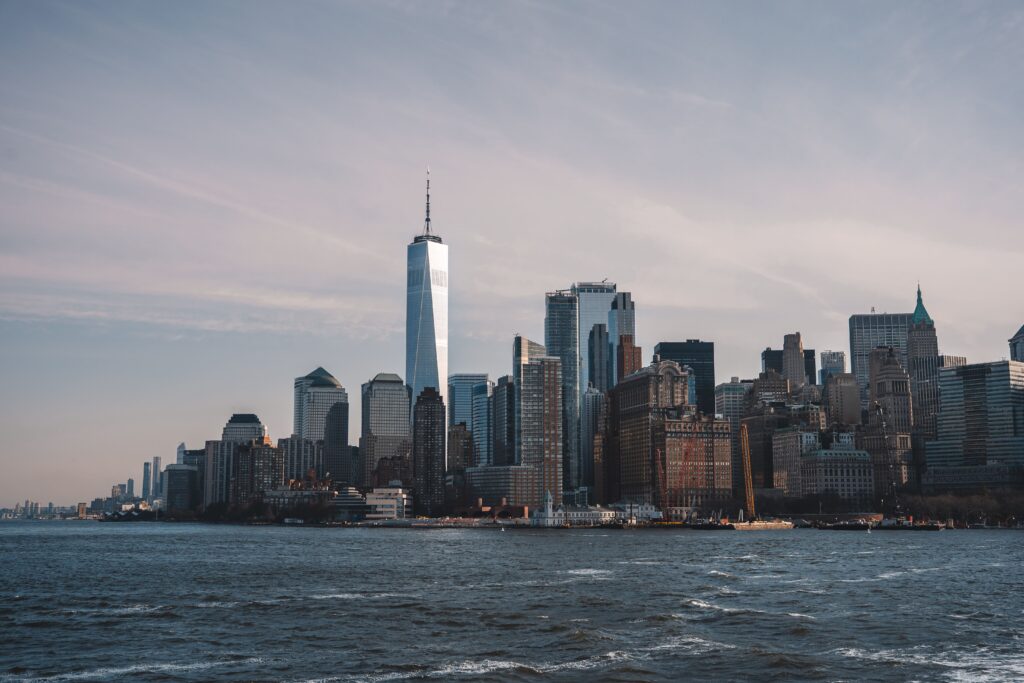
New York is one of the most photographed cities on earth, and most of those photos look exactly the same. Same bridge, same skyline, same rooftop, same five blocks of Manhattan doing all the work for eight million people’s worth of streets.
But the most cinematic version of New York usually isn’t in the frame everyone else is standing in. It’s a half-block over, down a mews nobody notices, behind a door that looks locked but isn’t, in a cemetery at the wrong time of day for a “cemetery,” which turns out to be exactly the right time for a photo.
This guide isn’t about the most iconic New York. It’s about the most cinematic one — the version that feels like a scene from a film you can’t quite place. If a spot feels like a moment waiting to happen rather than a landmark waiting to be checked off, it made the list.
If you’ve already done the classic aesthetic run — the High Line, the Oculus, the Brooklyn Bridge Promenade — this is the next layer down. Consider it the moodier, stranger, more personal companion to the standard NYC photo spot guide: the one for travelers who want the city to feel like a film set, not a postcard.
Quick Answer: The Most Cinematic Hidden Photo Spots in NYC
If you only have time for a handful, start here:
- Best hidden street: Pomander Walk (Upper West Side)
- Best old New York vibe: Patchin Place (Greenwich Village)
- Best moody downtown shot: Freeman Alley (Lower East Side)
- Best cinematic rooftop or elevated view: Elevated Acre (Financial District)
- Best secret-feeling West Village spot: Washington Mews
- Best weird, artsy hidden location: The New York Earth Room (SoHo)
Keep reading for the full list, plus timing notes, neighborhood routes, and the etiquette worth knowing before you go.
What Makes a New York Photo Spot Feel Cinematic
Before the list, it’s worth naming what actually separates a “cinematic” photo from a merely pretty one. It usually comes down to a handful of ingredients:
- Atmosphere — a sense that something happened here, or is about to
- Texture — worn brick, old ironwork, peeling paint, imperfect surfaces
- Scale — either dramatically small and intimate, or unexpectedly vast
- Light — low, angled, filtered through fire escapes or narrow gaps between buildings
- Framing — natural arches, alleys, and sightlines that do the composition work for you
- Unexpected quiet — a pocket of stillness in a city that rarely offers it
- Architectural personality — a building or block that looks like it belongs to a different decade, or a different city entirely
None of the spots below need a movie permit or a lighting crew. They just need you to notice them.
The 17 Hidden New York Photo Spots
1. Pomander Walk (Upper West Side)
Why it works: Tucked between West 94th and 95th Streets, this private mews of Tudor-style cottages looks like a slice of an English village dropped into Manhattan. Narrow, colorful, and almost cartoonishly charming.
Best for: Travelers chasing an “old world, wrong city” feeling.
Best time to shoot: Early morning on a weekday, when the street is empty and the light hits the timber-frame facades directly.
Quick tip: It’s a private residential walk with gated entrances at both ends — shoot respectfully from the gates or the public sidewalk rather than walking through, and keep noise down since people live here.
2. Washington Mews (Greenwich Village)
Why it works: A cobblestone lane just off Washington Square Park lined with converted carriage houses. It has the hush and texture of 19th-century New York, minus the crowds two blocks away.
Best for: Couples and portrait-style shots that want warmth without clutter.
Best time to shoot: Late afternoon, when the light rakes low across the cobblestones.
Quick tip: It’s owned by NYU and largely used for university housing, so it’s respectful to keep visits brief and camera-focused rather than lingering.
3. Patchin Place (Greenwich Village)
Why it works: A gated, ivy-softened cul-de-sac near Sixth Avenue with a literary history — e.e. cummings once lived here. It feels forgotten in the best way, like a set piece from a black-and-white film.
Best for: Moody, minimal shots — this is a one- or two-subject street, not a group photo backdrop.
Best time to shoot: Overcast days actually work better here than sun; the gray light suits the ironwork and shadow.
Quick tip: It’s still a residential street behind a locked gate, so the best shots come from just outside it, looking in.
4. Freeman Alley (Lower East Side)
Why it works: A narrow, graffiti-lined alley off Rivington Street that looks like it was built for a crime drama — fire escapes, layered street art, and a restaurant tucked at the end that only adds to the film-set feel.
Best for: Street photographers and anyone who wants texture over polish.
Best time to shoot: Blue hour, just after sunset, when the alley lighting kicks in.
Quick tip: It’s a working alley with restaurant deliveries and foot traffic, so be ready to step aside quickly.
5. MacDougal Alley (Greenwich Village)
Why it works: A quieter cousin to Washington Mews — a short, gated lane of converted stables just off Washington Square. Fewer people know it exists, which is exactly the point.
Best for: Quick, quiet shots between other Village stops.
Best time to shoot: Midday on weekdays, when NYU foot traffic is lower.
Quick tip: Combine it with Washington Mews for an efficient two-stop “hidden Village lanes” mini shoot.
6. The New York Earth Room (SoHo)
Why it works: A permanent art installation — 250,000 pounds of soil, 22 inches deep, filling an otherwise ordinary SoHo loft. The contrast between a plain white gallery space and a literal indoor field is the kind of surreal detail that photographs like a film still.
Best for: Anyone chasing “strange and unforgettable” over “pretty.”
Best time to shoot: Check current open hours before visiting — it’s a small, appointment-sensitive space, typically closed in summer, and photography policies can vary.
Quick tip: This is one to verify same-day, since hours are limited and seasonal.
7. 77 Water Street (Financial District)
Why it works: An otherwise unremarkable office building hides two of the city’s strangest details: a rooftop mock lighthouse and a fake vintage bus stop bench at street level, both leftover art installations. It’s the kind of found-object weirdness that makes for a genuinely original shot.
Best for: Travelers who like a photo with a story attached.
Best time to shoot: Weekday mornings, when the Financial District is quiet before the lunch rush.
Quick tip: The lighthouse is visible from the street below — you don’t need building access to get the shot.
8. 620 Loft and Garden (Rockefeller Center, Midtown)
Why it works: A rooftop garden six stories above Rockefeller Center that most visitors never realize exists, since it’s separate from the main observation deck. English-style plantings against a Midtown skyline backdrop feel improbably peaceful.
Best for: A calmer, greener alternative to Top of the Rock.
Best time to shoot: Late afternoon, golden hour, for warm light on the surrounding towers.
Quick tip: Access is limited and often tied to private events or specific booking windows — confirm current visiting arrangements before planning around it.
9. Elevated Acre (Financial District)
Why it works: A raised public park tucked above street level near Water Street, with a wooden amphitheater, lawn, and unobstructed harbor views that almost nobody outside the neighborhood seems to know about.
Best for: Quiet water views without the crowds of Battery Park.
Best time to shoot: Sunset, facing the harbor.
Quick tip: The entrance is easy to miss — look for the elevator and escalator tucked into the building facade at 55 Water Street.
10. Green-Wood Cemetery (Brooklyn)
Why it works: A 478-acre Victorian cemetery with Gothic gates, sweeping hills, mausoleums, and a resident colony of wild monk parakeets nesting in the entrance arch. It’s part historic landmark, part accidental nature reserve.
Best for: Dramatic, atmospheric wide shots and detail shots of the ironwork gate.
Best time to shoot: Late morning, when the light is soft and the parakeets are most active near the entrance.
Quick tip: It’s an active cemetery — move quietly, avoid stepping on graves, and be mindful of visitors there for other reasons.
11. Trinity Church Cemetery and Mausoleum (Washington Heights)
Why it works: Manhattan’s only active cemetery still permitting burials, spread across a hillside with Hudson River views. Fewer visitors make it here than to the Village’s Trinity Churchyard downtown, which is exactly what keeps it cinematic.
Best for: Wide, moody landscape shots with real scale.
Best time to shoot: Late afternoon, when the light comes in low across the hill.
Quick tip: Respect it as an active burial ground first, photo location second.
12. Renwick Ruins (Roosevelt Island)
Why it works: The crumbling shell of the old Smallpox Hospital sits at the southern tip of Roosevelt Island, half-swallowed by ivy, with the Manhattan and Queens skylines on either side. It’s one of the only true ruins in New York City, and it looks it.
Best for: Gothic, atmospheric shots with unusual skyline framing.
Best time to shoot: Golden hour, from the surrounding walkway (the ruin itself is fenced for safety).
Quick tip: You can’t walk inside the ruins, but the fencing is close enough for strong detail shots — bring a slightly longer lens if you have one.
13. Alice Austen House (Staten Island)
Why it works: A 17th-century waterfront cottage that was once home to pioneering photographer Alice Austen, with harbor views toward the Verrazzano-Narrows Bridge and a garden that feels frozen a century in the past.
Best for: Travelers who want an “old New York, no crowds” waterfront setting.
Best time to shoot: Late afternoon, and check the museum’s current open days before visiting, since hours are limited.
Quick tip: Pair it with the Staten Island Ferry ride over — the ferry itself is a solid bonus shot of the skyline.
14. Wave Hill (Riverdale, the Bronx)
Why it works: A public garden and cultural center perched above the Hudson, with pergolas, wildflower meadows, and river views that feel closer to the English countryside than the Bronx.
Best for: Soft, romantic garden shots away from Manhattan crowds entirely.
Best time to shoot: Morning, when the gardens are freshly lit and least busy.
Quick tip: There’s an admission fee on most days — check current pricing and free-entry windows before you go.
15. Hunters Point South Park (Long Island City, Queens)
Why it works: A newer waterfront park with industrial-edge landscaping, tall grasses, and a clean, wide-open view of the Manhattan skyline that photographs very differently from the more crowded Gantry Plaza a few blocks north.
Best for: Editorial-style skyline shots with foreground texture.
Best time to shoot: Blue hour, right as the skyline lights come on.
Quick tip: Walk the full length of the park — the quieter southern end has the least foot traffic.
16. Grand Central’s Whispering Gallery (Midtown)
Why it works: Just outside the Oyster Bar in Grand Central Terminal, the tiled, arched ceiling creates a whisper-transmitting acoustic quirk most commuters walk past daily without noticing. Visually, the low, vaulted archways feel like a scene from an old detective film.
Best for: A cinematic architectural detail shot inside a famous building, without competing for the Main Concourse ceiling shot everyone already has.
Best time to shoot: Mid-morning on weekdays, avoiding rush hour.
Quick tip: It’s a functioning transit corridor — keep gear compact and be ready to move for commuters.
17. Frank Lloyd Wright’s Staten Island House (Staten Island)
Why it works: The only Frank Lloyd Wright-designed home in New York City, a low, glass-walled residence tucked into a wooded Staten Island lot. Even seen only from the street, its horizontal lines and forest setting look nothing like the rest of the city.
Best for: Architecture-focused travelers who want something genuinely rare.
Best time to shoot: Overcast afternoons, which suit the glass and wood detailing better than harsh sun.
Quick tip: This is a private residence — photograph respectfully from the public street only, and don’t approach the property.
Best Hidden NYC Streets for Movie-Like Photos
If tucked-away streets are your favorite category, group these four together: Pomander Walk, Washington Mews, Patchin Place, and MacDougal Alley. All four sit within a reasonably walkable range of Manhattan’s West Side, and all four trade on the same feeling — a quieter, older New York hiding in plain sight behind gates most tourists never look for.
Best Moody and Unusual Photo Spots in New York
For something stranger, lean into The New York Earth Room, 77 Water Street, Renwick Ruins, and Freeman Alley. These aren’t classically pretty. They’re the kind of places that make a photo feel like a still from a film you half-remember — a little eerie, a little unexplained, and much more memorable than another skyline shot.
Best Hidden NYC Photo Spots for Different Traveler Types
- First-time visitor who wants something different: Washington Mews, 620 Loft and Garden, Renwick Ruins
- Repeat visitor who’s done the classics already: Trinity Church Cemetery, Wave Hill, Hunters Point South Park
- Street photographer: Freeman Alley, Grand Central’s Whispering Gallery, 77 Water Street
- Couples: Pomander Walk, Alice Austen House, 620 Loft and Garden
- Casual iPhone photographer: Green-Wood Cemetery, Elevated Acre, MacDougal Alley
- Traveler chasing “old New York” atmosphere: Patchin Place, Trinity Church Cemetery, Alice Austen House
Common Mistakes People Make When Hunting for Hidden Photo Spots in New York
- Chasing secrecy over quality. A spot being obscure doesn’t automatically make it a good photo. Prioritize atmosphere over exclusivity.
- Expecting every hidden gem to be dramatic. Some of the best shots on this list are quiet, small, and understated — that’s the appeal, not a flaw.
- Going at the wrong time of day. Several of these spots (mews, alleys, cemeteries) depend heavily on soft or low-angle light. Midday sun flattens almost all of them.
- Not checking access rules. A few spots on this list have limited hours, private ownership, or seasonal closures. Always confirm before building a day around one location.
- Trying to cram too many neighborhoods into one day. This list spans five boroughs. Pick a cluster and go deep rather than sprinting across the whole city.
Suggested Mini Photo Routes by Neighborhood
Greenwich Village hidden-lanes route: Washington Mews → MacDougal Alley → Patchin Place. All three sit within a 10–15 minute walk of each other, making this the easiest full route on the list.
Financial District oddities route: 77 Water Street → Elevated Acre. Both are within a few blocks, and both reward an early weekday morning before the district fills up.
Uptown quiet-and-strange route: Pomander Walk → Grand Central’s Whispering Gallery. A subway ride apart, but a good combination if you’re spending a day on the Upper West Side and Midtown.
Staten Island day-trip route: Alice Austen House → Frank Lloyd Wright’s Staten Island House. Best paired with the ferry ride over and back for a full afternoon.
Outer-borough green-space route: Green-Wood Cemetery → Hunters Point South Park (on separate days, or combined with a longer Brooklyn–Queens itinerary).
FAQ
What are the best hidden photo spots in New York? Pomander Walk, Washington Mews, Patchin Place, Freeman Alley, and the Renwick Ruins on Roosevelt Island are among the strongest, each offering a distinct visual mood that’s underused compared to the city’s main landmarks.
Where can I take cinematic photos in NYC? Look for narrow streets, gated mews, quiet cemeteries, and elevated or waterfront parks away from the main tourist circuit — atmosphere and light matter more than fame.
What are some underrated places to photograph in Manhattan? Washington Mews, MacDougal Alley, 620 Loft and Garden, and Grand Central’s Whispering Gallery all offer strong visuals with far fewer visitors than the city’s headline attractions.
Are there secret streets in NYC worth visiting? Yes — Pomander Walk, Washington Mews, and Patchin Place are genuine hidden streets, though several are private or gated, so plan to shoot respectfully from the entrances rather than walking through.
What part of NYC feels most like a movie? Old, textured, low-traffic corners tend to feel the most cinematic — think Village mews, downtown alleys, and quiet cemetery hillsides, rather than the biggest, busiest landmarks.
Final Thought
The best hidden photo spots in New York aren’t the ones nobody has ever heard of. They’re the ones that make the city feel personal — a little quieter, a little stranger, and just unreal enough to look like a scene from something you can’t quite name. Save a few of these for your next trip, and let the in-between places do some of the work your camera usually has to do alone.