
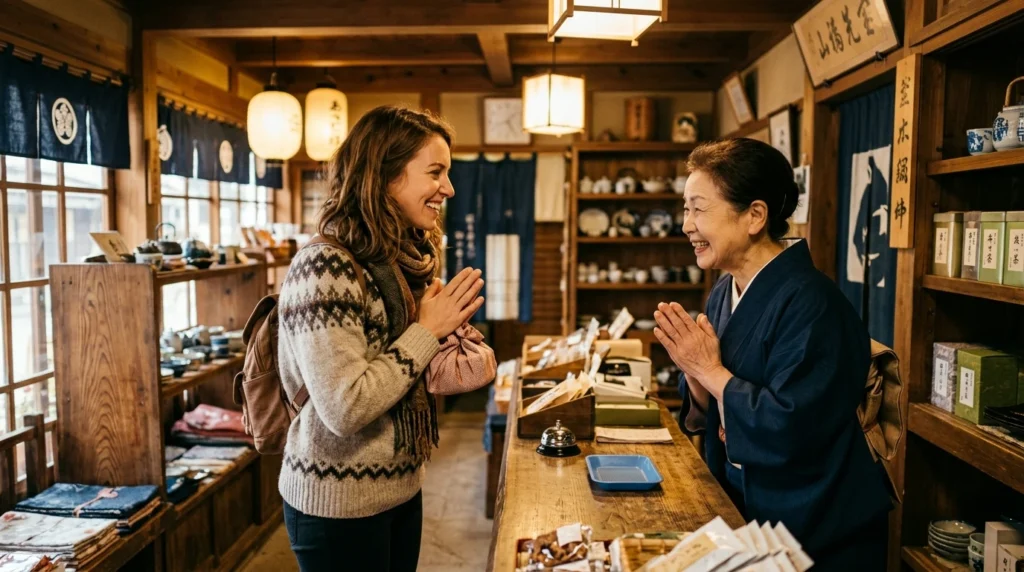
You’re standing in a small Tokyo café. It’s your second day in Japan. You’ve been practicing for weeks, but this is the moment that matters—a real conversation with a real person.
The barista hands you your coffee. Without thinking, you look them in the eye and say Arigatou gozaimasu with genuine warmth. Their face lights up. They smile. They say something kind in return. For just a moment, you’re not a tourist. You’re a respectful visitor. You’re someone who made an effort.
That smile? That’s not a coincidence.
There are three specific words that create this exact reaction in Japanese people, and they work almost like magic. But here’s the thing that most language guides won’t tell you: the words themselves aren’t what matters. It’s how you say them that creates the magic.
This post is about those three words, why they work, and—most importantly—how to deliver them with authenticity so you actually get that genuine human connection instead of just polite acknowledgment.
The Psychology Behind the Japanese Smile

Before we talk about the words, we need to understand why Japanese people respond so positively to certain phrases and gestures. It’s not just politeness. It’s something deeper.
Japanese culture is built on the concept of effort and respect. The idea of omotenashi—wholehearted hospitality—isn’t just something you see in high-end hotels. It’s woven into everyday interactions. When Japanese people see that a visitor has made genuine effort to use their language, it registers as respect. And respect, in Japanese culture, opens doors.
Here’s what happens in the minds of Japanese people when they hear a foreigner speak Japanese:
First, there’s surprise. “Oh, they speak Japanese.” This is the baseline reaction in most tourist areas because many visitors don’t even try.
Then, there’s calculation. “How good are they? Can we communicate?” This is neutral.
But then—and this is crucial—there’s emotional recognition. They realize that you’ve put in effort. You’ve taken time to learn. You’re showing respect for their culture. This triggers a different response than if you just asked in English. It triggers warmth.
The three words we’re about to discuss work because they communicate respect in a way that transcends the literal meaning of the words. They say: “I acknowledge you. I appreciate you. I respect your culture.”
Japanese people don’t just smile because you said a word correctly. They smile because they feel valued.
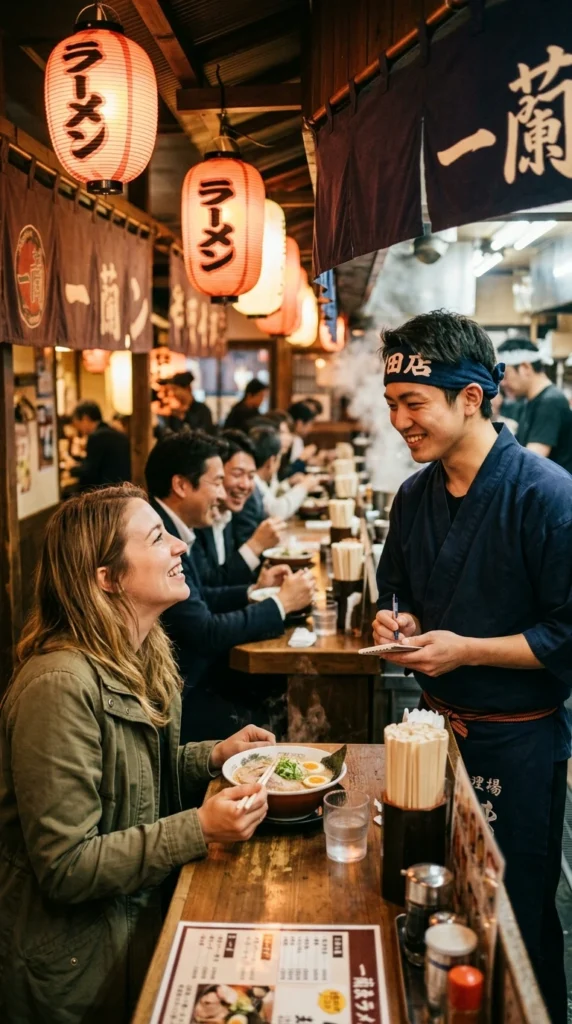
The Three Words That Change Everything
Word 1: Arigatou Gozaimasu (ありがとうございます)
This is the heavyweight champion of gratitude. Arigatou gozaimasu is the polite form of “thank you,” and it’s going to be the most powerful phrase in your entire Japanese vocabulary.
Here’s why it matters so much: Most foreigners don’t say thank you enough in Japan. They take things for granted. They receive help and move on. But Japanese people notice when you acknowledge their effort—and they notice even more when you do it with genuine emotion.
When the waiter brings your food, saying arigatou gozaimasu isn’t just politeness. It’s acknowledging their work, their attention, their effort. When a stranger helps you find your way, arigatou gozaimasu says “your kindness mattered to me.”
The psychology of gratitude is powerful. When you genuinely thank someone, you’re reinforcing their positive behavior. You’re telling them that their effort is valued. In return, they become more helpful, more patient, and more engaged with you.
But here’s the critical part: You have to mean it. If you say arigatou gozaimasu in a flat, robotic voice while looking at your phone, it lands like an obligation. If you say it with warmth while making eye contact and smiling slightly, it lands like genuine appreciation. The words are the same. The impact is completely different.
The smile you get back isn’t just because you said a Japanese phrase. It’s because you delivered gratitude in a way that feels authentic.

Word 2: Sumimasen (すみません)
Now here’s an interesting one. Sumimasen literally means “I’m sorry” or “excuse me,” but it’s so much more nuanced than that. It’s your universal connector in Japanese society.
What makes sumimasen so powerful is that it combines two attitudes at once: humility and respect. When you say sumimasen, you’re not just asking for attention. You’re acknowledging that you’re taking someone’s time, and you’re grateful for it.
Think about how this plays out in real situations:
You’re in a crowded restaurant and you need the waiter. You could snap your fingers or wave aggressively. But if you say sumimasen quietly and respectfully, you’re communicating: “I recognize you’re busy. I’m sorry to interrupt. But I need help.”
That’s a fundamentally different energy than demanding attention.
Japanese people smile at sumimasen not because it’s a magic word, but because it shows awareness of social context. You understand that other people have their own work, their own time, their own priorities. You’re not just grabbing what you need—you’re asking respectfully for it.
The smile comes from recognition that you’re not a typical tourist who acts entitled. You’re someone who understands that interactions have a social dance to them.
The key to saying sumimasen authentically: Say it as if you genuinely mean it. Not aggressively. Not desperately. But with quiet respect. Imagine you’re gently interrupting a friend—that’s the energy.

Word 3: Yoroshiku Onegaishimasu (よろしくお願いします)
This is the phrase that catches most travelers off guard because it doesn’t have a perfect English translation. Yoroshiku onegaishimasu is often translated as “nice to meet you” or “please treat me well,” but it’s actually more subtle than that.
The phrase basically means: “I’m counting on you. I respect you. Please take care of me in this interaction.”
This is the phrase that creates the deepest connections. When you say yoroshiku onegaishimasu to someone, you’re establishing a relationship beyond a transactional moment. You’re saying that this interaction matters. They matter.
Here’s where Japanese people really smile: When you use this phrase correctly, you’re tapping into something cultural. You’re showing that you understand Japanese social dynamics. You’re not just using a translation of English phrases—you’re thinking in Japanese social terms.
Imagine you’re meeting a small business owner, or you’re being introduced to someone important to your host. Yoroshiku onegaishimasu says: “I respect you. I’m honored to meet you. This matters to me.”
People smile at this phrase because it signals genuine respect and cultural awareness. You’ve gone beyond basic politeness into something that shows you understand their culture.
The key to saying it authentically: Use yoroshiku onegaishimasu when meeting someone important or when you’re entering into an interaction that feels significant. Say it with confidence and sincerity. Don’t whisper it. Own it.
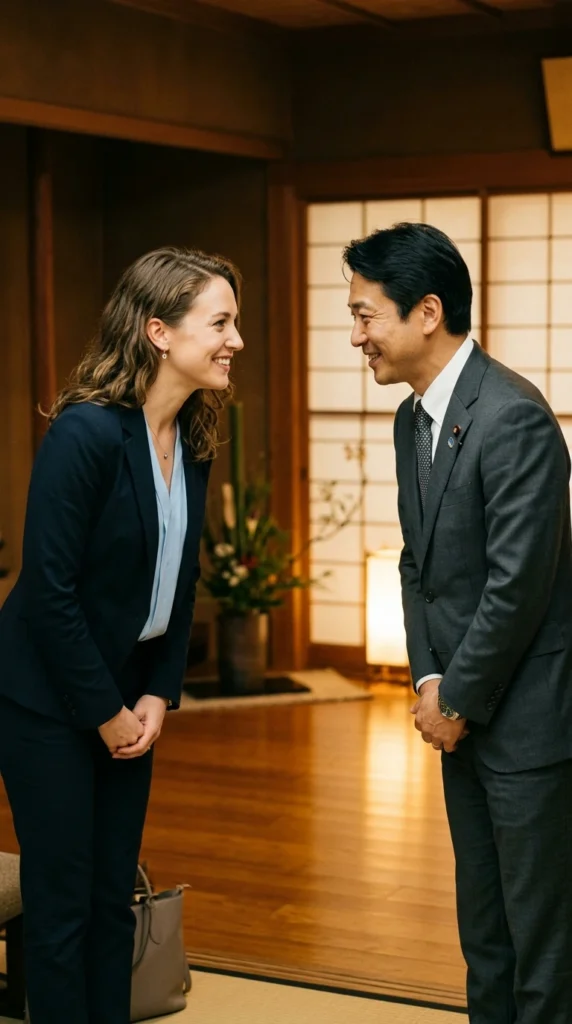
How to Sound Natural (The Pronunciation Secrets Nobody Talks About)
Here’s where most crash courses in Japanese fail: They teach you the words, but they don’t teach you how to deliver them in a way that sounds natural.
You can know all three of these phrases perfectly, but if you deliver them with awkward pronunciation and uncertain energy, you’ll get a polite response instead of a genuine smile.
Let’s break down how to sound natural with each one:
Arigatou Gozaimasu: The Gratitude Delivery
The biggest mistake people make with this phrase is rushing through it or making it sound robotic.
Here’s how it should sound: ah-ree-gah-toe go-zah-ee-mas
But the rhythm matters more than the individual sounds. Each syllable gets approximately equal weight. It’s not “ah-REE-gah-toe GO-zah-ee-mass” with stressed syllables. It’s more flowing and even.
The real secret: Smile when you say it. This isn’t just advice—it’s neuroscience. When you smile, your voice naturally softens and becomes warmer. Japanese people can hear the smile in your voice even before they see it on your face. That warmth is what transforms a thank you into genuine appreciation.
Try saying it right now with a neutral face, then with a smile. You’ll hear the difference immediately.
Sumimasen: The Respectful Interruption
The word structure is: soo-mee-mah-sen
The common mistake is making it sound too apologetic or too timid. You want to sound respectful, not weak.
Imagine you’re saying it to a friend whose name is Sumimasen. You’re getting their attention. That’s the tone. Respectful but confident. Clear but not demanding.
The secret is the initial sound. Start with a clear “soo” sound (like “sue” but rounder). This establishes presence. Then flow through the rest of the word naturally.
When you say it this way, Japanese people hear confidence wrapped in respect. That’s when they smile. You’re not begging for attention. You’re politely requesting it as your right as a respectful person.
Yoroshiku Onegaishimasu: The Relationship Builder
This one is: yo-ro-shee-koo o-neh-gah-ee-mas
The mistake people make is treating it like a throwaway phrase instead of a meaningful statement.
This phrase deserves weight. Slow it down slightly. Enunciate clearly. Make eye contact when you say it. This is a phrase that establishes respect.
The secret is the double vowel in “onegaishimasu.” Hold the “ee” sound slightly longer. This gives the phrase presence and sincerity. It’s the difference between mumbling a greeting and making a genuine acknowledgment.
When you say it this way, with presence and eye contact, you’re not just saying words. You’re communicating cultural understanding.
Real Situations Where These Three Words Create Magic
Let me show you exactly how these three words work in real situations, and why the smile happens.
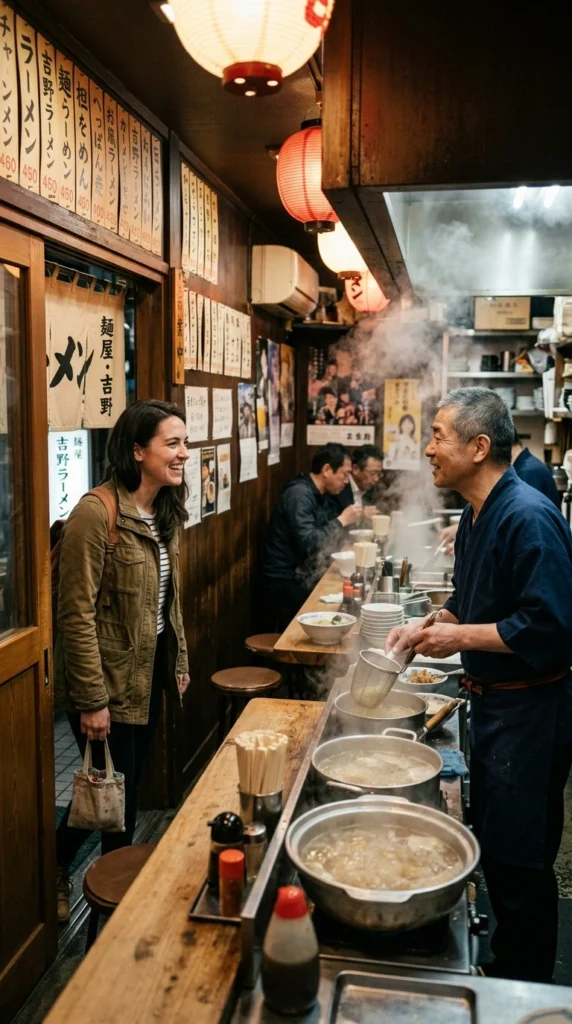
Scenario 1: The Small Restaurant Moment
You enter a tiny ramen shop in a residential neighborhood. The owner looks up. You smile and say Konnichiwa (hello), then Yoroshiku onegaishimasu (I respect you, please take care of me).
The owner’s face changes. They nod warmly. Why? Because you’ve just communicated that you’re not just another tourist passing through. You’re treating them as someone important. You’re acknowledging their space and their effort.
Twenty minutes later, your ramen arrives. It’s perfect. You look at the owner and say Arigatou gozaimasu with genuine warmth, making eye contact.
They smile genuinely. They might even say something kind in return—spoken slowly so you can understand.
That smile isn’t just politeness. It’s recognition. You made them feel valued.
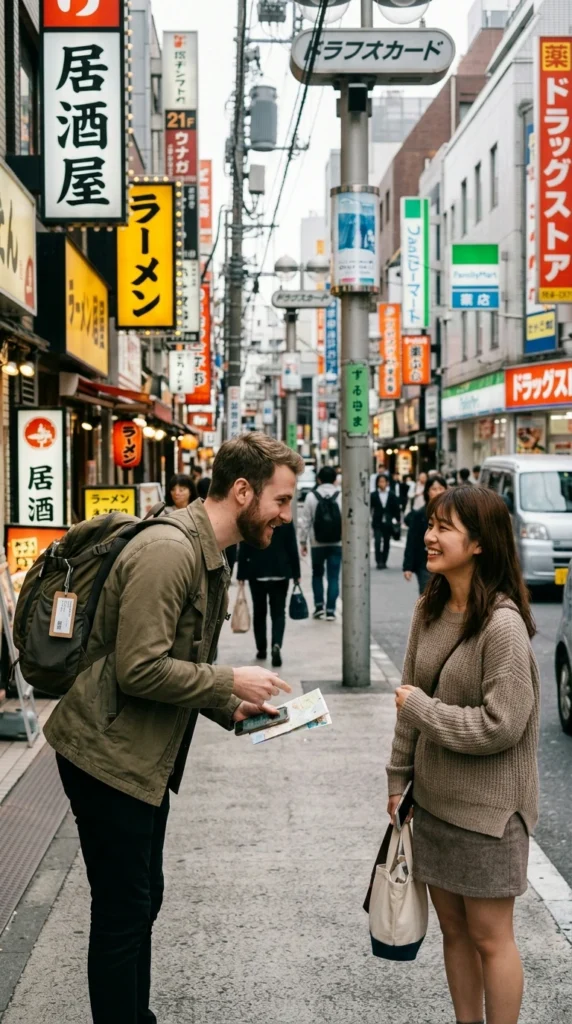
Scenario 2: The Helpful Stranger on the Street
You’re lost. You see a young woman on the street and say Sumimasen respectfully. She turns. You show her your phone with your destination. She understands and spends 5 minutes explaining directions, even drawing on your map.
When she’s done, you look her in the eye and say Arigatou gozaimasu with real appreciation.
She smiles—and it’s not just a polite smile. It’s genuine. Why? Because you acknowledged that she took time out of her day for you. You made her feel like her effort mattered.
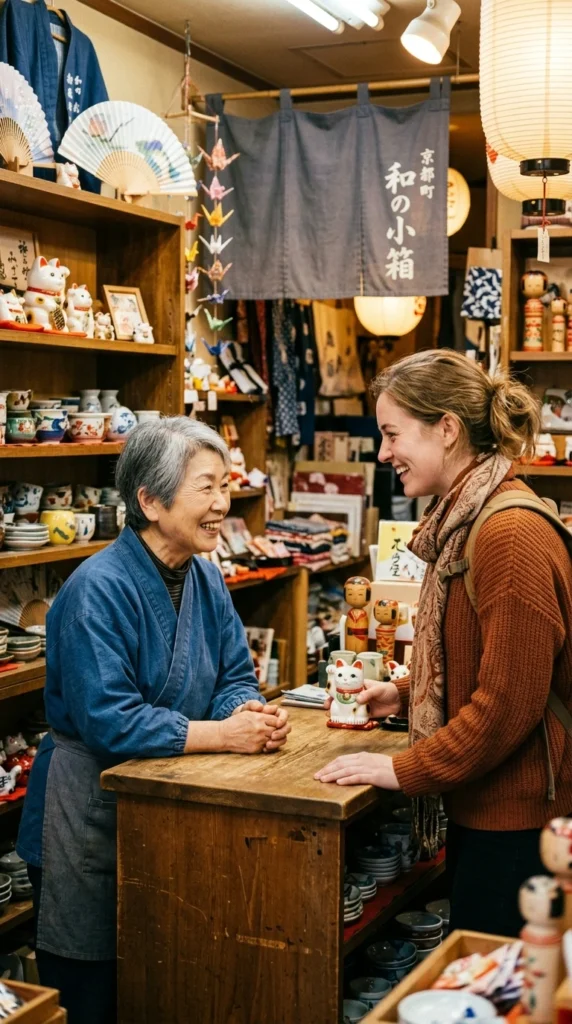
Scenario 3: The Shop Owner Connection
You’re browsing a small souvenir shop. The owner is behind the counter. You smile and say Konnichiwa, then casually Yoroshiku onegaishimasu as you browse.
The owner’s entire demeanor shifts. They become more attentive, more helpful. They might even offer recommendations.
You pick something up, ask the price politely, and decide to buy. As they’re wrapping it, you say Arigatou gozaimasu with warmth.
They wrap your item with extra care. They might include a small gift or an extra item as a thank you for your respect.
This isn’t magic. This is what happens when people feel valued. You’ve created a positive interaction by showing respect, and they’re responding in kind.
The Emotional Intelligence Behind the Words

Here’s something important: Japanese people aren’t smiling because you pronounced words correctly. They’re smiling because you demonstrated emotional intelligence.
When you say arigatou gozaimasu with genuine warmth, you’re communicating: “I understand that people have put effort into helping me, and I value that.”
When you say sumimasen respectfully, you’re communicating: “I understand that I’m taking your time, and I respect that.”
When you say yoroshiku onegaishimasu, you’re communicating: “I respect you and this interaction. You matter to me.”
These three phrases work because they reflect genuine attitudes. If you use them cynically or mechanically, Japanese people will sense it. If you use them authentically, they’ll respond with authentic warmth.
The smile happens because you’ve demonstrated that you see them as human beings worthy of respect—not just people who can help you get what you want.
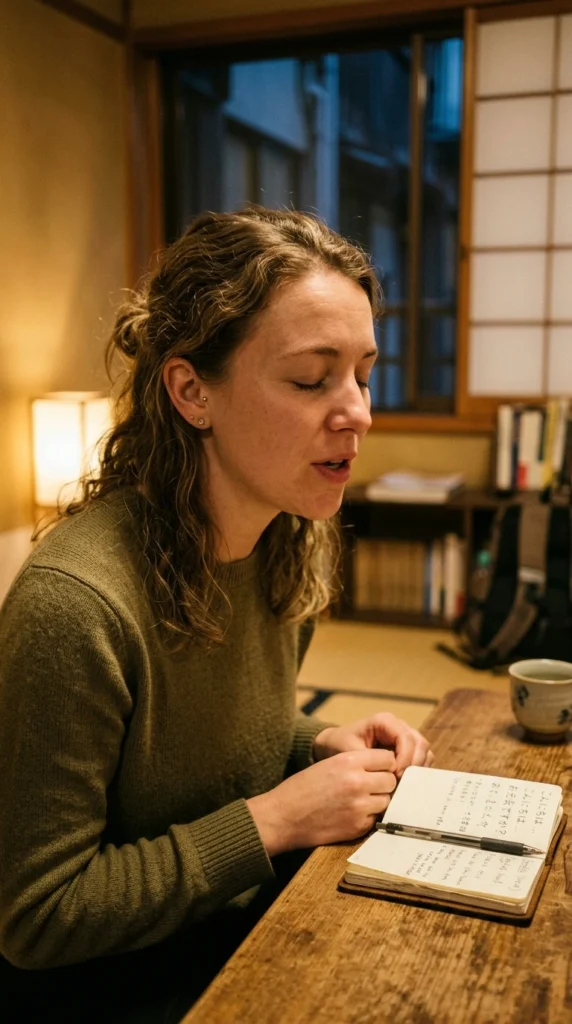
The Practice That Actually Works
Most people practice these phrases by repeating them over and over in isolation. That doesn’t build authenticity. Here’s what actually works:
Practice with context and emotion.
Don’t just say arigatou gozaimasu 50 times. Instead, imagine a real scenario. Picture a kind waiter bringing you your food. Feel gratitude. Then say the phrase as if you mean it. Do this 10 times, each time with genuine emotion behind it.
Don’t just say sumimasen repeatedly. Imagine you’re interrupting someone. Feel the respectful awareness of taking their time. Then say it. Do this 10 times with authentic respect.
Don’t just say yoroshiku onegaishimasu like a robot. Imagine you’re meeting someone important. Feel the respect. Make eye contact. Say it. Do this 10 times with presence.
This practice method works because it builds emotional connection to the words. When you practice with genuine emotion, your brain doesn’t just learn the pronunciation—it learns the attitude that makes the words land authentically.
When you arrive in Japan and actually use these phrases, they’ll come out naturally because you’ve already practiced them with the right emotional foundation.
The Deeper Truth About Connection
Here’s something most language learning programs won’t tell you: Learning a language isn’t really about communication. It’s about connection.
You can communicate with gestures and translation apps. But connection requires effort. Connection requires respect. Connection requires showing that you care enough to speak someone’s language, even imperfectly.
These three words—arigatou gozaimasu, sumimasen, yoroshiku onegaishimasu—are connection tools. They’re not magical words that automatically make people like you. They’re words that demonstrate that you’ve made the effort to respect their culture.
And that effort is what creates the smile.
Japanese people don’t smile because you said something impressive. They smile because you showed respect. They smile because you treated them as people worthy of that respect. They smile because connection happened—real, human connection.
This is why these three words matter more than vocabulary lists or grammar rules. They’re the foundation of authentic human interaction.
Going Deeper: The Complete Phrase Guide
If you want to understand the full context of these words and how they fit into the broader world of Japanese phrases, this comprehensive guide covers all the essential Japanese phrases plus pronunciation rules and real-world applications that deepen your understanding.
But honestly? You don’t need everything. These three words—delivered with authenticity and genuine respect—will take you incredibly far. They’re the foundation that everything else builds on.
The Bottom Line: Authenticity Always Wins
You’re going to travel to Japan. You’re going to meet people. You’re going to be nervous about saying things perfectly.
Here’s what I want you to remember: Perfect pronunciation doesn’t create the smile. Authentic respect does.
Learn these three words. Practice them with genuine emotion. Say them with presence and eye contact. Show people that you respect their time, their effort, and their culture.
That’s when the magic happens. That’s when the smile isn’t just polite—it’s genuine.
You don’t need to sound like a native speaker. You need to sound like someone who cares.
And that? That’s something you already know how to do.