
If it’s your first trip to Italy, you don’t need to see the whole country to have an unforgettable experience. Ten days is enough for a rich, classic itinerary — especially if you focus your time on three cities instead of trying to squeeze in ten. Rome, Florence, and Venice have been the backbone of the first-time Italy trip for a reason: each one is completely different from the others, they’re well connected by train, and together they give you ancient history, Renaissance art, and canal-side atmosphere in a single, manageable loop.
This guide is a practical, day-by-day Italy itinerary built around that classic trio. It covers how to split your 10 days, which order makes the most sense, how to get between cities, what to prioritize in each one, and — just as important — what to skip so the trip doesn’t turn into a race.
Is 10 Days Enough for Italy?
Yes — as long as you focus on a few major destinations instead of trying to cover the entire country.
It’s tempting to look at a map of Italy and want to add Cinque Terre, the Amalfi Coast, Milan, and a Tuscan hill town or two. But on a first trip, that usually backfires: you end up spending more time on trains and packing suitcases than actually experiencing any one place. A tighter route pays off.
Rome, Florence, and Venice alone are enough to fill 10 days comfortably, with room to breathe between the big sights. Even shorter versions of this route work — some itinerary frameworks show that six days is already enough to combine all three cities — so a full 10 days gives you a more relaxed, less rushed version of that same classic trip. You get the icons, but you also get time to sit in a piazza, get a little lost, and let the country set the pace instead of a checklist.
Why Rome, Florence, and Venice Make the Best First Italy Route
These three cities work so well together because they don’t overlap — each one gives you something completely different.
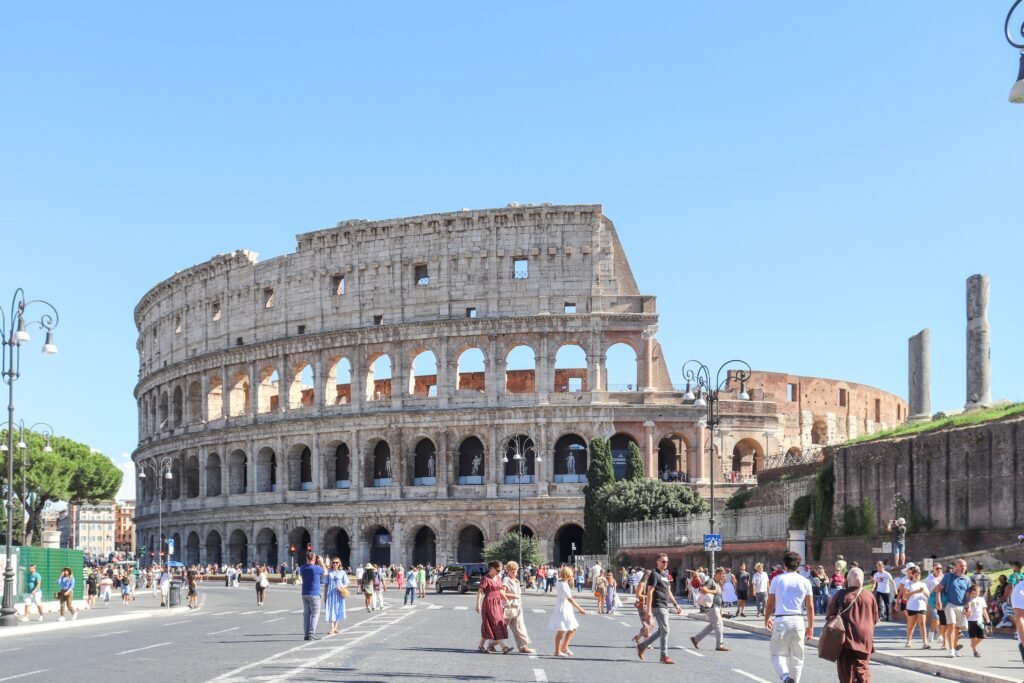
- Rome is ancient history and big-city energy: the Colosseum, the Roman Forum, the Vatican, and centuries layered on top of each other in every direction you look.
- Florence is Renaissance art and human scale: a compact, walkable city where you can cross from the Duomo to the Arno River in twenty minutes, with Tuscany just outside its edges.
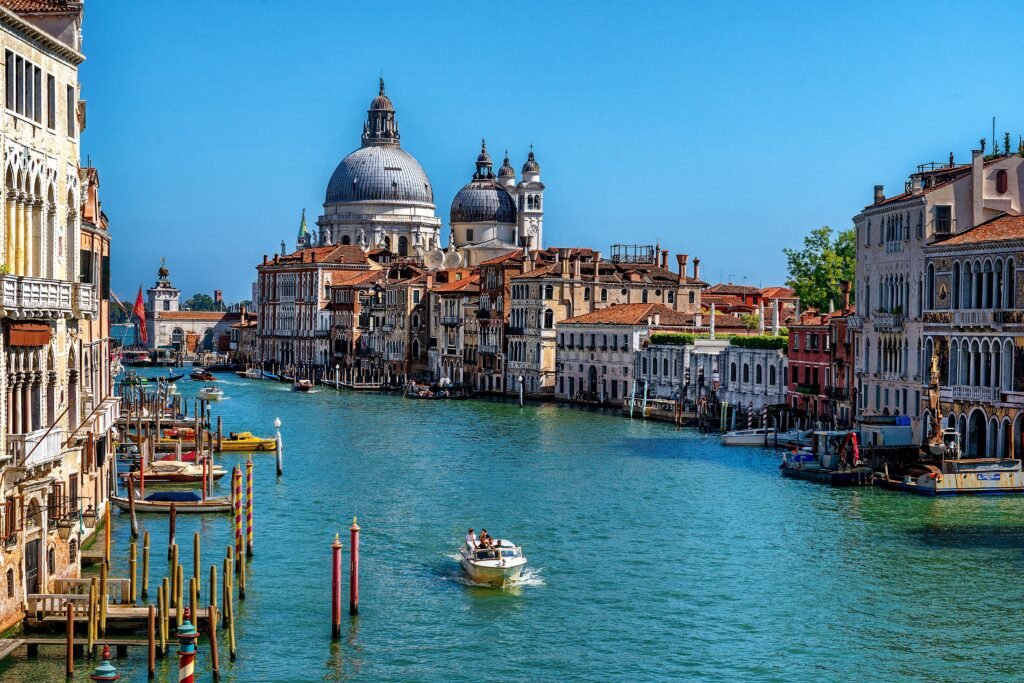
- Venice is atmosphere unlike anywhere else in the world: canals instead of streets, no cars, and a completely different rhythm of daily life.
Put together, this trio gives first-timers a genuinely well-rounded picture of Italy — not just a highlight reel, but three distinct identities that make the country worth returning to.
The Best Order for This Italy Itinerary
There are two solid ways to run this route:
- Rome → Florence → Venice (south to north)
- Venice → Florence → Rome (north to south)
Both work well, and the “right” choice usually comes down to logistics rather than sightseeing. A few things to weigh:
- Flights: If it’s cheaper or more direct to fly into Rome and out of Venice (or vice versa), let that decide your direction — it saves you from backtracking.
- Arrival energy: Rome is intense, dense, and a lot to take in on jet lag. Some travelers prefer to ease in with Florence or Venice first and save Rome’s bigger scale for when they’re more adjusted.
- Ending on a high note: Venice makes a memorable, low-key finale — it’s a nice city to wind down in before flying home. Rome, on the other hand, is a strong, energetic way to kick off a trip if you’d rather hit the ground running.
Either direction covers the same essential ground. Pick the one that fits your flights and travel style, and don’t overthink it beyond that.
How to Get Around Italy for This Trip
Trains are the default — and honestly the best — way to handle this itinerary, and it’s worth planning your transport around them from the start.
Italy has a well-developed rail network, and high-speed trains make travel between major cities fast and genuinely comfortable, often faster city-center to city-center than flying once you account for airport time. The two major operators, Trenitalia and Italo, run frequent connections between Rome, Florence, and Venice throughout the day, and tickets can be booked online in advance or picked up at the station.
A few practical notes:
- Book high-speed routes in advance, especially in peak season — prices rise closer to travel dates, and popular departure times can sell out.
- Check your ticket type before boarding. Some regional or lower-cost tickets require validation or stamping at the platform before you get on; high-speed reserved tickets typically don’t. It’s worth confirming this when you buy your ticket so you’re not caught off guard at the station.
- You will not need a rental car for this route. All three cities are well served by train, have historic centers that are difficult (or impossible, in Venice’s case) to drive into, and a car adds cost and stress without adding value here.
Budget roughly 1.5 hours for the Florence–Venice leg and about 1.5–2 hours for Rome–Florence on a high-speed train, which makes travel days easy to combine with a partial sightseeing day on either end.
Recommended Night Split for 10 Days in Italy
Here’s the split we’d recommend for most first-timers:
- Rome: 4 nights
- Florence: 3 nights
- Venice: 2 nights
This gives Rome the extra day it needs — it’s simply a bigger, denser city with more ground to cover — while still giving Florence enough time to feel unrushed and giving Venice enough time to wander beyond the main tourist crush without overstaying in a city that’s genuinely walkable in a couple of days.
Alternative split: Rome 3 nights / Florence 3 nights / Venice 3 nights, with a more even feel and a built-in flex day you can use anywhere the trip needs it — whether that’s a slower morning, a day trip, or just an extra buffer around travel days.
Either split works. The 4-3-2 version leans into Rome’s size; the 3-3-3 version spreads things out evenly and gives you more flexibility. Choose based on whether you’re more excited about ancient Rome or want equal time everywhere.
Days 1–4: Rome
Rome deserves the most time on this itinerary, and it rewards a loose theme-per-day approach rather than trying to see everything at once.
Day 1 — Ancient Rome: Start with the Colosseum, Roman Forum, and Palatine Hill. Booking timed entry in advance is essential here — this is one of the most visited sites in the world, and walk-up lines can eat half a day. Pair it with a walk past the Pantheon and Trevi Fountain in the evening, when the crowds thin out.
Day 2 — Vatican City: Dedicate a full day to the Vatican Museums, the Sistine Chapel, and St. Peter’s Basilica. This is a lot to take in, and it’s genuinely worth booking a timed entry rather than waiting in line. If museum fatigue isn’t your thing, this can be swapped for a smaller, curated alternative — but for most first-timers, the Vatican is one of Rome’s non-negotiables.
Day 3 — Piazzas and neighborhoods: Give yourself a slower day of wandering: Piazza Navona, Campo de’ Fiori, the Spanish Steps, and the surrounding streets. This is a great day to build in a longer lunch and let Rome’s street life do the work instead of another packed schedule.
Day 4 — Trastevere and a final evening: Spend your last Rome evening in Trastevere, the cobblestone neighborhood across the river known for its relaxed, local feel and strong dinner scene. It’s a nice contrast to the monument-heavy earlier days and a good way to close out the Rome leg of the trip.
Days 5–7: Florence
Florence changes the rhythm of the trip almost immediately — it’s smaller, denser with art, and far more walkable than Rome.
Day 5 — Arrival and the Duomo: After your train from Rome, ease in with the Duomo (Florence Cathedral) and its dome, plus a wander through the surrounding streets. Florence’s historic center is compact enough that you can cover a lot on foot without a rigid schedule.
Day 6 — Renaissance art day: This is the day to prioritize the Uffizi Gallery and the Accademia (home to Michelangelo’s David). Both benefit enormously from advance booking — lines without a reservation can run over an hour, even outside peak season.
Day 7 — Bridges, piazzas, and pacing: Cross the Ponte Vecchio, explore the Oltrarno neighborhood on the other side of the Arno, and give yourself time to simply enjoy Florence’s food scene — this is Tuscany’s backyard, and it shows in every trattoria. If you want a taste of the surrounding countryside without a full day trip, a short walk up to Piazzale Michelangelo for sunset gives you rolling hills and a skyline view in one stop.
Days 8–10: Venice
Venice is the most atmospheric stop on this itinerary, and it’s best enjoyed with unstructured time to wander rather than a packed agenda.
Day 8 — Arrival and getting lost (on purpose): After arriving by train into Venezia Santa Lucia station, spend your first afternoon simply wandering away from the main routes. Venice rewards aimlessness — some of the best moments happen on quiet canals with no tour groups in sight.
Day 9 — St. Mark’s Square and one major sight: Visit St. Mark’s Basilica and the Doge’s Palace, and take in St. Mark’s Square itself, ideally early in the morning before the cruise-ship crowds arrive. Round out the day with one major museum, church, or palace — the Gallerie dell’Accademia or a smaller palazzo, depending on your interests.
Day 10 — A slower final day: Use your last morning and afternoon for whatever Venice showed you over the past two days that you want more of — a return visit to a favorite canal, a vaporetto ride down the Grand Canal, or simply more time getting intentionally lost. Mornings and evenings tend to be Venice’s best hours, once the day-trippers have come and gone.
Two nights is enough for a genuine first taste of Venice — not so little that it feels rushed, but appropriately brief for a city you can walk end to end in under an hour.
What to Book in Advance
A little advance planning goes a long way on this itinerary and takes a lot of the stress out of travel days:
- Timed entry for the Colosseum, Vatican Museums, Uffizi Gallery, and Accademia
- High-speed train tickets between Rome, Florence, and Venice, especially in peak season
- Accommodations, particularly in central locations near train stations to minimize luggage-hauling
- Any high-priority museum or palace slots in Venice if there’s a specific site you don’t want to miss
None of this needs to turn your trip into a spreadsheet — it’s just enough structure to avoid losing hours of vacation time to lines.
What to Skip on a 10-Day First Italy Trip
This is where the itinerary becomes genuinely useful instead of just aspirational. None of this is “never do it” — it’s “save it for next time.”
- Adding the Amalfi Coast, Cinque Terre, Milan, and Tuscan hill towns all in the same trip. Each of these deserves real time of its own, and squeezing them in usually means seeing all of them poorly.
- Renting a car for this specific route. It adds cost, parking headaches, and stress in cities built for walking and trains — it’s simply unnecessary here.
- Too many one-night stops. Constantly repacking eats into actual trip time; this itinerary is built around fewer, longer stays for a reason.
- Forcing day trips that eat up city time. A rushed day trip to Pisa or the countryside can cost you a full day you’d otherwise spend actually enjoying Florence or Venice.
- Treating Florence like just a base for Tuscany. It’s a remarkable city in its own right and deserves its three days, not just a stopover before day trips.
Think of this list as a preview of your second Italy trip, not a list of things you missed.
Common First-Timer Italy Mistakes to Avoid
- Underestimating travel days — even fast trains still take a chunk out of a day when you factor in getting to and from stations
- Overpacking the itinerary with extra stops that sound good on paper but don’t fit the pacing
- Skipping advance bookings for major sights and losing hours to lines
- Assuming every museum needs to be seen in full, rather than choosing a few priorities per stop
- Arriving in Rome or Venice with no neighborhood strategy, leading to backtracking across the city
- Choosing logistics over experience — cramming in one more sight instead of just enjoying where you already are
FAQ
Is 10 days enough for Italy? Yes, if you focus on a few major destinations. Ten days is plenty of time to comfortably experience Rome, Florence, and Venice without feeling rushed.
What is the best 10-day Italy itinerary? For first-timers, a Rome–Florence–Venice route (or the reverse) is the classic, well-tested option: roughly 4 nights in Rome, 3 in Florence, and 2–3 in Venice, connected by high-speed train.
How many days should I spend in Rome, Florence, and Venice? A good starting split is 4 nights in Rome, 3 in Florence, and 2–3 in Venice, adjusting based on your interests — more museum-focused travelers may want extra time in Florence, while history-focused travelers may want more time in Rome.
Should I travel Italy by train? Yes, for this route. Italy’s high-speed rail network connects Rome, Florence, and Venice quickly and comfortably, and it’s generally easier than flying or driving between these three cities.
Is Rome Florence Venice the best first trip to Italy? For most first-time visitors, yes. The three cities are distinct from one another, well connected by train, and together give a well-rounded introduction to the country without overcomplicating the trip.
Do I need a rental car for this Italy itinerary? No. Trains cover this route efficiently, and a car adds unnecessary cost and complexity in cities with limited or restricted vehicle access.
10 Days in Italy: Quick Planning Box
- Route: Rome → Florence → Venice (or reverse, based on flights)
- Night split: Rome 4 / Florence 3 / Venice 2–3
- Transport: High-speed train (Trenitalia or Italo) between all three cities
- Book ahead: Colosseum, Vatican Museums, Uffizi Gallery, Accademia, train tickets, accommodations
- Skip for this trip: Amalfi Coast, Cinque Terre, Milan, rental car, extra one-night stops
Final Thoughts
If you want a first Italy trip that feels iconic, manageable, and deeply rewarding, Rome, Florence, and Venice are still the gold-standard route — especially when you give each city enough time to breathe instead of squeezing in more stops than 10 days can comfortably hold. Book your major sights ahead of time, let the trains do the heavy lifting between cities, and leave room in each city for the moments that don’t show up on any itinerary. That’s what turns a well-planned trip into the one that makes you want to come back.