
Four days in Paris is not enough time to “do everything.” Nobody does everything in Paris — not even people who live there. But four days is absolutely enough to fall in love with the city: to stand under the Eiffel Tower at golden hour, wander a few perfect neighborhoods, eat your weight in pastry, and walk away already planning your next trip.
The trick isn’t cramming more in. It’s picking the right things, grouping them by neighborhood so you’re not crisscrossing the city like a pinball, and leaving room to just be in Paris — a café terrace, a slow lunch, an aimless walk along the Seine. This 4-day Paris itinerary is built around that idea. It’s a practical, first-timer-friendly guide to what to see, where to eat, and what you can comfortably skip.
Is 4 Days in Paris Enough?
Yes — as long as you plan by neighborhood instead of by checklist.
The travelers who leave Paris exhausted and slightly disappointed are usually the ones who tried to hit every major sight on every “top things to do in Paris” list, regardless of where those sights actually are in the city. The travelers who leave in love with Paris are the ones who accepted a simple truth: Paris rewards slowness.
That means:
- Grouping attractions by area instead of zigzagging across town
- Leaving space for café time, not just monument time
- Choosing a handful of major sights instead of every famous name
- Allowing at least one day that’s more about atmosphere than checklists
- Not scheduling every evening — some of the best Paris memories happen when you have nowhere to be
Four days, organized well, gets you the icons, a few great neighborhoods, and enough breathing room to actually enjoy the trip instead of just documenting it.
What to Know Before Visiting Paris
A little planning up front makes the whole trip smoother.
Getting around: Paris has an extensive public transportation network, and the metro is generally the fastest and easiest way to get across the city. You can also use the RER (regional express trains), tramway, and buses to reach certain neighborhoods and day-trip destinations. If you’re unsure how to navigate it, Paris’s official tourism resources include practical help for planning routes and understanding ticketing.
Walkability: Many of Paris’s most iconic districts — the Latin Quarter, Montmartre, Saint-Germain — are historic and very walkable, often more enjoyable on foot than by metro, especially in good weather.
Arrival and departure days: If you’re arriving or leaving with luggage in tow, look into left-luggage services and tourist information points, which can make those transition days far less stressful.
A few more practical basics:
- Book major attractions (Eiffel Tower summit, Louvre, Musée d’Orsay) in advance — walk-up lines can eat hours of your trip
- Wear shoes you’ve already broken in; Paris is a walking city
- Keep each day’s plan geographically tight rather than bouncing between opposite ends of the city
- Double-check hours and any closures for museums and monuments before you go, since these can change
Should You Buy the Paris Museum Pass?
This is one of the more genuinely useful planning decisions for a short trip, and it deserves an honest answer instead of a blanket “yes.”
The official Paris Museum Pass covers entry to more than 50 museums and monuments around the city, with several duration options, including a 4-day pass. According to the official pass site, the general logic is that the pass starts paying for itself once you’re visiting several sites — savings typically kick in starting around your fifth visit — and it can also help you skip some ticket lines.
The pass makes sense if:
- You’re planning to visit multiple major museums (Louvre, Musée d’Orsay, and others) plus monuments during your stay
- You want the line-skipping benefit at popular sites
- You like the flexibility of popping into smaller museums without weighing the cost each time
The pass probably isn’t worth it if:
- You’re mostly there for neighborhoods, food, and a couple of headline sights
- You only plan to visit one or two paid attractions total
- Your days are more about wandering than museum-hopping
Not every 4-day Paris itinerary needs to be museum-heavy, and that’s fine. Decide based on your actual plans, not because a pass exists.
Day 1 — Classic Paris: Eiffel Tower, Trocadéro, Seine & the Arc
Start with the postcard version of the city — it’s a cliché because it works, and getting the “big” Paris out of the way early sets a great tone for the rest of the trip.
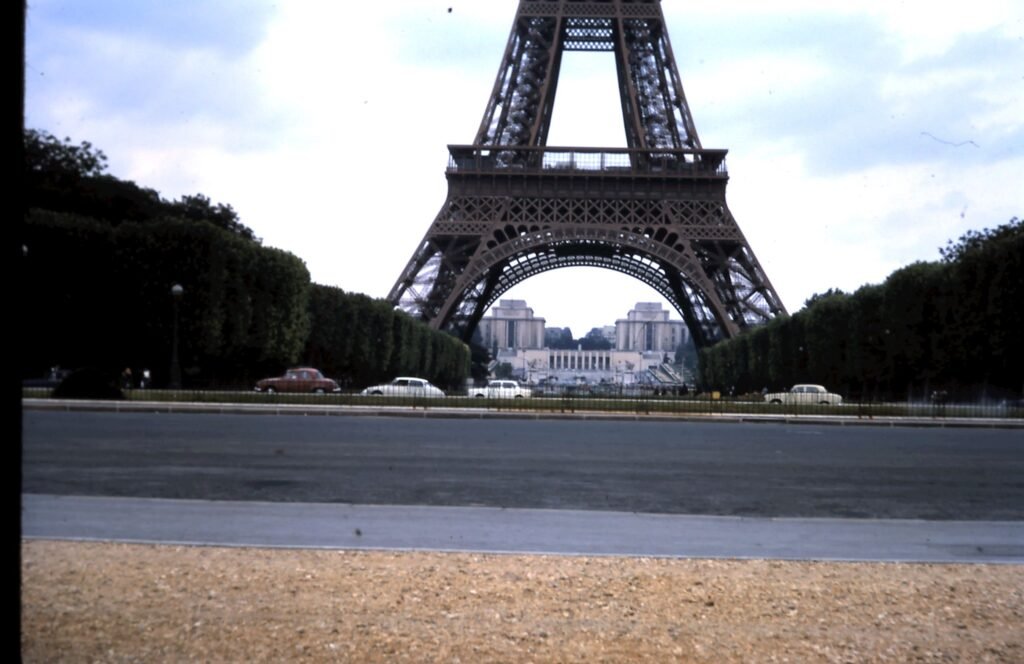
Morning: Head to the Eiffel Tower first thing, before crowds build. If you booked ahead, go up for the views; if not, admiring it from below and from the surrounding gardens is still worthwhile.
Trocadéro: Cross over to Trocadéro for the classic wide-angle photo — the plaza and gardens here give you the best full view of the tower, especially in morning light.
Seine stroll: Walk along the river toward central Paris. The riverside paths, bridges, and bouquiniste stalls (the green riverside bookstalls) are quintessential Paris and cost nothing but time.
Afternoon: Make your way to the Champs-Élysées and the Arc de Triomphe. You don’t need to spend your whole afternoon on the avenue itself — a walk-through and a photo at the Arc is usually enough — but climbing the Arc for a sunset view over the city is a genuinely great use of an hour.
Evening: A Seine river cruise or a sunset drink somewhere with a tower view is a relaxed, low-effort way to close out day one.
Food for the day: Keep it simple and enjoyable. A classic café breakfast, a pastry stop mid-morning, and a cozy bistro dinner are all you need — no need for an ambitious meal on your first, jet-lagged day.
Day 2 — Louvre, Tuileries, Île de la Cité & the Latin Quarter
This is your art-and-history day, centered on the historic heart of the city.
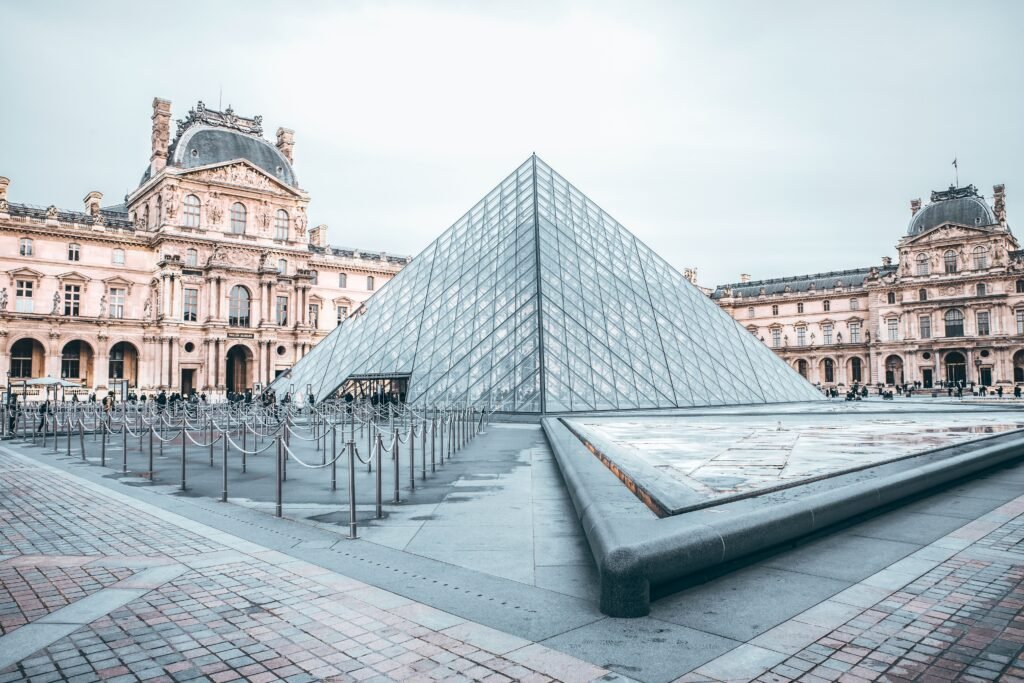
Morning: Start at the Louvre. You will not see the whole museum in a morning, and that’s okay — pick two or three sections or must-see works (yes, including the Mona Lisa, but don’t build your whole visit around it) and let yourself skip the rest guilt-free.
Midday: Walk through the Tuileries Garden on your way east — it’s a lovely, unhurried transition between the museum and the river.
Afternoon: Cross to Île de la Cité to see Notre-Dame from the outside and take in the island’s atmosphere, then continue into the Latin Quarter. Wander Rue Mouffetard, one of the neighborhood’s most charming market streets, and swing by the Panthéon if you have the energy.
Optional: If pacing allows, Luxembourg Garden is a beautiful spot to rest your feet before dinner.
Food for the day: This is a strong day for a café lunch near the Latin Quarter, a glass of wine at a neighborhood wine bar, or a classic Left Bank bistro dinner.
Day 3 — Montmartre, Sacré-Cœur & Paris Atmosphere
Make this your least scheduled, most wandering-focused day. After two days of major sights, Montmartre is a welcome shift in pace.
Morning: Head up to Montmartre and let yourself get a little lost. The neighborhood still carries the feel of a village — winding cobblestone streets, ivy-covered buildings, and a bohemian atmosphere that’s very different from the rest of the city.
Sacré-Cœur: Visit the basilica and take in the panoramic view over Paris from the steps out front — one of the best free views in the city.
Place du Tertre: Wander through the small square known for street artists, but don’t feel obligated to buy a portrait unless it appeals to you.
Afternoon: Duck into quieter side streets away from the main tourist path, stop for a coffee or bakery break, and just let the neighborhood set the pace.
Evening (optional): A cabaret show or a rooftop bar with a skyline view is a fun way to close out a more relaxed day, if you’re up for a later night.
Food for the day: This is a great day for an unhurried café breakfast, a bakery stop for something sweet, and dinner in a small, local Montmartre bistro rather than anything near the main tourist square.
Day 4 — Musée d’Orsay, Saint-Germain, Gardens & a Flexible Finish
Your last day should feel adaptable — part art, part Left Bank café culture, part “whatever we didn’t get to yet.”
Morning: Visit the Musée d’Orsay, home to an incredible Impressionist and Post-Impressionist collection, housed in a former train station that’s worth seeing on its own.
Midday: Walk into Saint-Germain-des-Prés, known for its historic cafés and literary history. This is a great neighborhood to slow down in rather than rush through.
Afternoon: Choose your own adventure based on what you love:
- Art + Left Bank: Linger in Saint-Germain, browse a few galleries or bookshops
- Shopping + café culture: Explore the department stores, or head to Le Marais for boutiques and a different neighborhood feel
- Slower final day: Spend time in Luxembourg Garden or revisit a favorite spot from earlier in the trip
Evening: A final relaxed dinner, maybe near a market or gourmet food hall like Marché des Enfants Rouges, is a nice way to close the trip without overplanning your last night.
What to Eat in Paris on a 4-Day Trip
Rather than chasing a list of specific restaurants, think in terms of experiences — these are the meals and moments that actually make a Paris trip memorable.
- Croissant/bakery breakfast: A warm croissant or pain au chocolat from a good neighborhood bakery beats almost any hotel breakfast.
- Café terrace lunch: Sitting outside at a café, watching the street, is as much a Paris experience as any monument.
- Classic bistro dinner: At least one proper sit-down bistro meal — steak frites, coq au vin, onion soup — belongs on the trip.
- Wine and cheese stop: An early-evening glass of wine with a cheese or charcuterie board is an easy, low-effort way to feel like you’re really doing Paris right.
- Pâtisserie moment: Even if you’re not a big dessert person, one proper French pastry — an éclair, a mille-feuille, a fruit tart — is worth the calories.
- Market or gourmet hall visit: A stop at a covered market or food hall, like Marché des Enfants Rouges, gives you a great mix of quick bites in one spot.
A few notes on eating smart in Paris: not every meal needs to be ambitious. Save your “big” bistro dinner for one or two nights, and let other meals be simple and spontaneous. Also, be a little wary of restaurants immediately next to major landmarks — the food is rarely the best version of what’s available a few blocks away.
What to Skip in Paris on a Short Trip
This is where a good itinerary becomes a genuinely useful one. “Skip” here doesn’t mean “this isn’t worth it” — it often just means “save it for next time.”
- Trying to do too many museums in one day. Museum fatigue is real, and it ruins the second and third stop of the day.
- Squeezing in Versailles. It’s incredible, but it’s a half-day trip on its own and doesn’t fit comfortably into a tight 4-day Paris itinerary without sacrificing something else.
- Waiting in long lines without timed entry. If a major sight requires standing in an unbooked line for hours, it’s rarely worth the time cost on a short trip.
- Overdoing the Champs-Élysées. It’s famous, but it’s also one of the more commercial, less distinctly “Parisian” stretches of the city — a walk-through is plenty.
- Overbooking every evening. Leave at least one night open for something unplanned.
- Assuming every famous café is worth the wait. Some of the most Instagrammed cafés have long lines and unremarkable food — a quieter neighborhood café is often the better experience.
Think of your “skip” list as a preview of your next trip, not a list of regrets.
Best Neighborhoods to Prioritize on a First Paris Trip
If you only remember one piece of planning advice, make it this: explore Paris district by district rather than sight by sight. Here are the areas worth building your days around:
- Eiffel Tower / 7th arrondissement — the classic, monument-dense area
- Île de la Cité — the historic island heart of the city
- Latin Quarter — student energy, market streets, and history
- Saint-Germain-des-Prés — cafés, literary history, Left Bank charm
- Montmartre — village atmosphere and the best skyline views
- Tuileries / Louvre zone — gardens and grand architecture
- Le Marais — trendy, boutique-filled, great for a shopping-focused afternoon
Pick a home base near one or two of these areas, and let your days radiate outward from there.
Common Paris Itinerary Mistakes to Avoid
- Booking too many timed tickets in a single day, leaving no buffer if something runs long
- Planning long cross-city hops back and forth instead of grouping by neighborhood
- Underestimating museum fatigue and scheduling two major museums back to back
- Forgetting to build in café and walking time, treating the trip like a checklist instead of an experience
- Trying to fit in Versailles on a tight 4-day trip
- Overplanning restaurants so rigidly that there’s no room for a spontaneous find
FAQ
Is 4 days enough for Paris? Yes, if you prioritize a handful of major sights, organize your days by neighborhood, and don’t try to see everything. Four days won’t cover all of Paris, but it’s enough for a rich, memorable first trip.
What should I see in Paris in 4 days? The Eiffel Tower and Trocadéro, the Louvre and Tuileries Garden, Notre-Dame’s exterior and the Latin Quarter, Montmartre and Sacré-Cœur, and the Musée d’Orsay and Saint-Germain are a strong, well-paced core itinerary.
What should I skip in Paris on a short trip? Consider skipping Versailles, long unbooked lines, back-to-back museum days, and overly packed evenings. These are easier to add on a return trip than to force into four days.
Is the Paris Museum Pass worth it? It depends on your plans. If you’re visiting several museums and monuments, it can save both money and time in line. If your trip leans more toward neighborhoods and food, you may not need it.
What should first-timers eat in Paris? Prioritize experiences over specific restaurants: a bakery breakfast, a café terrace lunch, one classic bistro dinner, a wine-and-cheese stop, and at least one proper pastry.
What is the best neighborhood to stay in for 4 days in Paris? Saint-Germain-des-Prés, the Latin Quarter, and Le Marais are all central, walkable choices that put you close to multiple must-see areas.
The Perfect 4-Day Paris Itinerary: Quick Picks
- Day 1: Eiffel Tower → Trocadéro → Seine stroll → Champs-Élysées & Arc de Triomphe
- Day 2: Louvre → Tuileries Garden → Île de la Cité → Latin Quarter
- Day 3: Montmartre → Sacré-Cœur → Place du Tertre → quiet side streets
- Day 4: Musée d’Orsay → Saint-Germain-des-Prés → gardens, shopping, or Le Marais → relaxed final dinner
Final Thoughts
The perfect 4-day Paris itinerary isn’t about doing everything — it’s about seeing enough of the city’s icons, neighborhoods, and food culture to fall in love with Paris, while leaving plenty of reasons to come back. Plan by area, prioritize a few major sights over a checklist of every famous name, and save room for the parts of Paris that don’t show up on any itinerary: the café terrace, the unplanned walk, the pastry you didn’t research in advance. That’s the trip you’ll actually remember.