
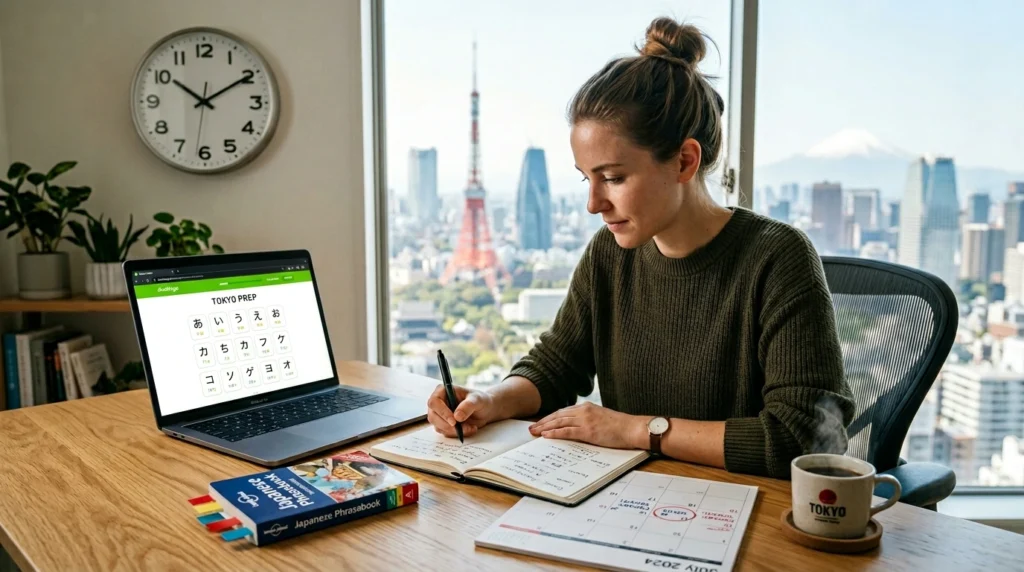
You’ve got a long weekend. You’ve booked the flight. You’re landing in Osaka in 48 hours, and you just realized you don’t speak a single word of Japanese.
Your palms are sweating a little.
Here’s what you’re thinking: “I should probably download one of those language apps. But which one? How long will it take? Will I actually learn anything useful, or will I just waste time conjugating verbs I’ll never use?”
The good news? You don’t need an app subscription, a textbook, or hours of study time. What you need is a strategic crash course that teaches you the exact phrases that matter—the ones that will actually get you fed, help you navigate the city, and let you have genuine interactions with locals.
And the best part? It’s completely free, and you can do it in 48 hours.
Why 48 Hours Is Actually Enough Time
Most people think language learning has to be a long-term commitment. They imagine themselves signing up for a 6-month course, showing up to weekly classes, and gradually building knowledge over time. That’s one approach. But it’s not the only approach—and it’s definitely not the fastest.
Here’s something neuroscientists have discovered: your brain is incredibly efficient at learning when the information is relevant and immediately applicable. When you know you’re flying to Japan in two days, your brain stops procrastinating and starts absorbing. When you know you’re going to use these phrases at dinner tomorrow night, they stick in your memory in ways that abstract textbook exercises never will.
The key is cutting out everything that doesn’t matter and focusing laser-beam tight on what you’ll actually need. No grammar lessons about conditional tenses. No memorizing 100 words when 20 will solve your problems. Just the pure, distilled essentials.
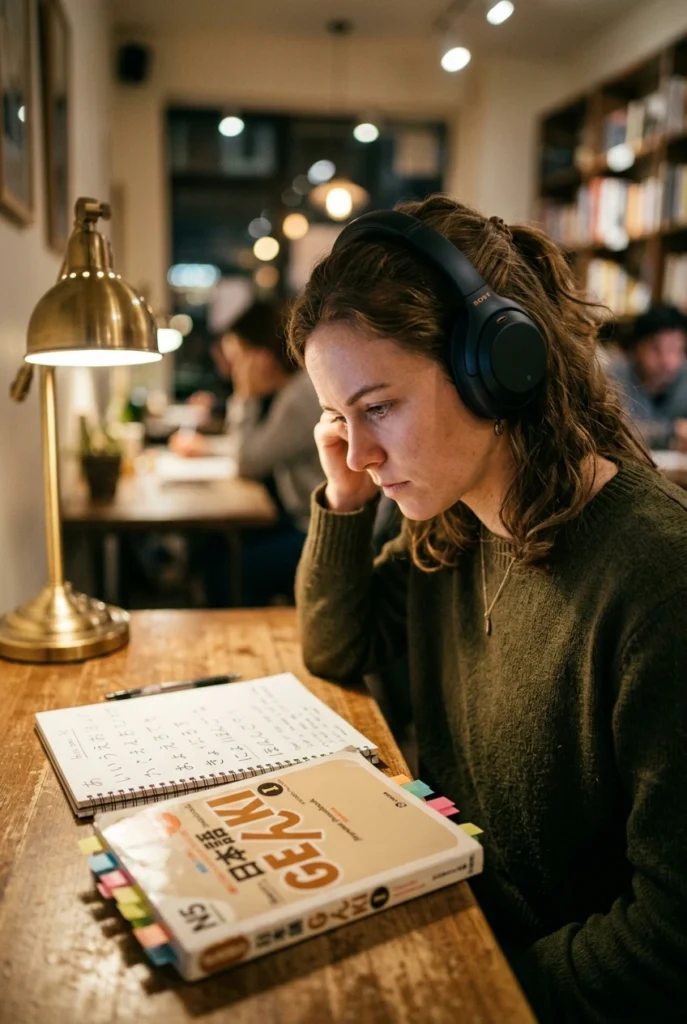
The 48-hour window works because:
- You have urgency (which activates learning)
- You can focus on exactly 3 use-cases (restaurant ordering, directions, polite conversation)
- You’ll practice these phrases repeatedly because you know they’re coming up soon
- Your brain locks in information that has immediate real-world application
It’s not about becoming fluent. It’s about becoming functional and confident.
The Three Pillars of Your Crash Course
Your 48-hour Japanese education breaks down into three distinct areas. Each one solves a specific problem you’ll face during your trip. Master these three, and you’ve covered roughly 80% of the social situations you’ll encounter.
Pillar 1: Restaurant Ordering (4-6 hours of focus)
You’re going to eat in Japan. Multiple times. This isn’t optional. Japan has some of the world’s best food, and you’re going to want to experience it without pointing at random menu items and hoping for the best.
The good news? Restaurant ordering in Japan is surprisingly formulaic. You don’t need to understand the full menu. You need to know how to signal the waiter, how to order, and how to communicate basic preferences (spicy, vegetarian, allergies).
Pillar 2: Navigation & Directions (3-4 hours of focus)
You’ll get lost. Maybe not immediately, but at some point you’ll be standing outside a train station wondering which way to turn. You need the phrases that help you ask for directions, understand basic responses, and confirm you’re on the right track.
This pillar is about building confidence in unfamiliar spaces. When you know you can ask for help in Japanese, you stop panicking. You become an explorer instead of a nervous tourist.
Pillar 3: Polite Small Talk (2-3 hours of focus)
The most underrated skill in travel is the ability to have a brief, warm interaction with locals. These aren’t deep conversations. They’re the moments where you greet someone, thank them genuinely, and maybe exchange a few sentences. These moments are where memories get made.
This pillar teaches you the phrases that let you be respectful, warm, and genuinely connected—even with a tiny vocabulary.
Day 1: Your 24-Hour Foundation Sprint
Hours 0-4: Restaurant Ordering Bootcamp
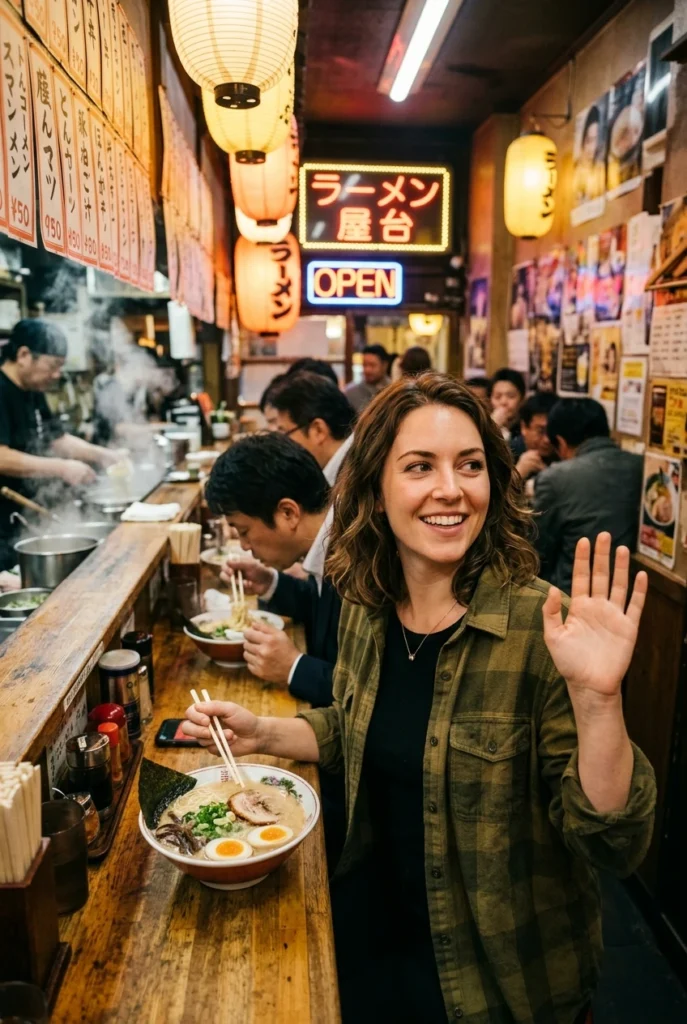
Let’s start with the most immediate need: getting food. You’re going to be hungry, and Japan’s food culture is incredible. You don’t want to miss out because of a language barrier.
Here’s what you need to know for restaurant situations:
First, you need the attention-grabber. In a busy restaurant, you can’t just sit there and hope someone notices you. Say Sumimasen (excuse me) and raise your hand slightly. This works in every restaurant in Japan. It’s polite, it’s expected, and it works instantly.
Next, you need the order phrase. Point at what you want and say Kudasai (please give me this). That’s it. Simple, direct, effective. No complicated sentences needed.
If you have dietary restrictions or allergies, learn to say them. But here’s the hack: you can just point at the menu and say what you’re avoiding. “Vegetarian” works in most Japanese restaurants because the word is similar across languages. If you have a severe allergy, write it down in Japanese or carry a card.
Finally, you need to understand the price check. Say Ikura desu ka? (how much is it?) before ordering anything that doesn’t have a visible price. This prevents surprises and shows you’re a thoughtful traveler.
Practical exercise for Hours 0-4:
- Spend 30 minutes hearing native pronunciation of these phrases (use this interactive guide to listen to real speakers)
- Spend 20 minutes practicing saying each phrase out loud 10 times until they feel natural
- Spend 30 minutes watching YouTube videos of restaurant interactions in Japan
- Spend 15 minutes looking at actual Japanese restaurant menus online and picking items, then writing out what you’d say to order them
- Spend 15 minutes reviewing and practicing again
The key to all of this? Repetition out loud. Your mouth needs muscle memory. Your ear needs to hear the rhythm. This isn’t intellectual learning—it’s physical training.
Hours 4-8: Direction & Navigation Foundations
Now that you can get food, you need to be able to move around the city without constant panic.
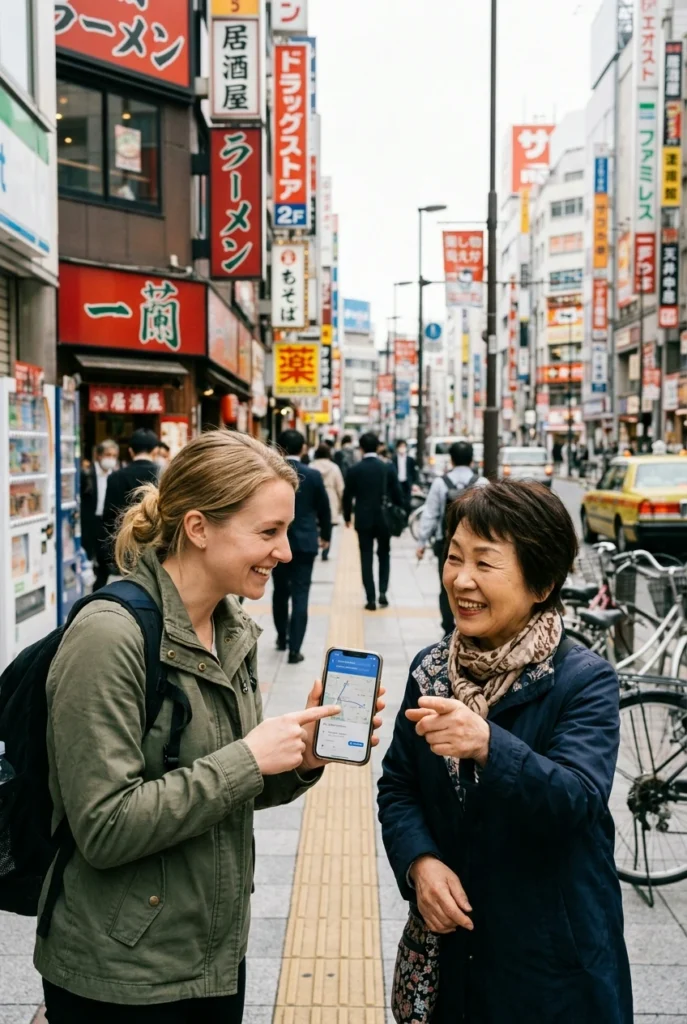
The most important phrase here is the template: [Something] wa doko desu ka? (Where is [something]?) This structure is your Swiss Army knife for navigation. Swap out different locations, and you’ve got endless applications.
Eki wa doko desu ka? (Where is the train station?) Toire wa doko desu ka? (Where is the bathroom?) Hotel wa doko desu ka? (Where is my hotel?)
Once someone tells you directions, you need to confirm understanding. Say Wakarimashita (I understand). This tells them you’re following along and buys you time to process what they said.
The genius of this approach: You don’t need to understand their full response. You just need to recognize key words and context. “Left,” “right,” “straight,” “next to the train station”—these words sound similar across languages or are easy to pick up from context and gestures.
Practical exercise for Hours 4-8:
- Spend 30 minutes learning the template structure and practicing variations
- Spend 20 minutes listening to native speakers giving directions (available on language learning platforms)
- Spend 30 minutes studying Google Maps of areas you’ll visit, identifying key landmarks and practicing asking how to get to them in Japanese
- Spend 20 minutes practicing the listening exercise—someone gives directions in Japanese, you say Wakarimashita
- Spend 20 minutes reviewing all the directional phrases again
Pro tip: Download Google Translate offline and keep it on your phone. If someone gives you directions you don’t understand, you can show them your phone and they’ll point at the map. Technology is your friend here.
Hours 8-12: Small Talk & Connection Building
This is where your trip goes from “functional” to “memorable.”
Most travelers think they need sophisticated conversation skills to connect with locals. Actually, you need about 5 phrases:
Konnichiwa (Hello) – Use this when you enter shops or meet people. It’s warm, it’s respectful, it opens doors.
Arigatou gozaimasu (Thank you very much) – Use this for everything. The cashier, the waiter, someone who helped you, a stranger who gave you directions. Gratitude is a universal language that amplifies goodwill.
Yoroshiku onegaishimasu (Nice to meet you / Please treat me well) – Use this when being introduced to someone or when you meet a shopkeeper you’ll interact with multiple times. This phrase alone will earn you genuine warmth from Japanese people.
Eigo wo hanasemasu ka? (Do you speak English?) – Your backup phrase when communication breaks down. By asking in Japanese first, you’ve already shown respect and effort.
Sumimasen (Excuse me / Sorry) – Your universal connector. It gets attention, it’s polite, it bridges gaps.
These five phrases are your bridge to authentic human connection. They’re not impressive because of vocabulary. They’re impressive because they show respect and genuine effort.
Practical exercise for Hours 8-12:
- Spend 30 minutes hearing native pronunciation and practicing each phrase until they feel natural
- Spend 20 minutes practicing the emotional tone—gratitude should sound warm, greetings should sound confident
- Spend 20 minutes watching short clips of Japanese people greeting each other and tourists greeting locals
- Spend 20 minutes creating scenarios in your head—you’re meeting someone at a café, greet them, thank them, say goodbye. Do this 10 times mentally
- Spend 10 minutes final review and practice
Hours 12-24: Integration & Confidence Building
The second half of Day 1 is about putting it all together and building the confidence that comes from repeated successful mental rehearsal.
Here’s what integration looks like: You’re sitting in your house, and you mentally run through your entire first day in Japan. You land at the airport. You get a taxi. You arrive at your hotel and check in. That evening, you go to a restaurant. You order dinner. You ask where the bathroom is. You thank the waiter. You go back to your hotel. You’re ready for bed.
Now run through that scenario again. But this time, say the Japanese phrases out loud.
Again.
Again.
By the 5th or 6th time, you’ll notice something: the phrases don’t feel foreign anymore. They feel like normal, natural responses. Your brain has started to automate them. That’s exactly what you want.
Day 1 Evening Checkpoint:
- Can you order food without thinking too hard?
- Can you ask for directions?
- Can you thank someone warmly in Japanese?
- Do these phrases feel somewhat automatic?
If yes to all four, you’re ready for Day 2.
Day 2: Your 24-Hour Refinement & Immersion Sprint
Hours 24-32: Pronunciation Perfection
On Day 2, your focus shifts from learning new phrases to sounding natural when you say them.
This is where most crash courses fail. People learn the phrases but deliver them with uncertain, hesitant pronunciation. Japanese people still understand, but the interaction loses something—the confidence that comes from authentic effort.
Spend these 8 hours focused purely on how the phrases sound. Here are the four pronunciation rules that make the biggest difference:
Rule 1: Every syllable gets equal weight. Japanese is “mora-timed,” which means each syllable gets roughly the same duration. Don’t stress random syllables like you would in English. Su-mi-ma-sen is not “SUH-mee-mah-sen.” It’s more like “su-mi-ma-sen” with even rhythm throughout.
Rule 2: The “u” is often whispered. In words like desu, masu, and Sumimasen, the final or medial “u” is nearly silent. This is the biggest difference between tourist pronunciation and natural-sounding speech. Most beginners pronounce desu as “dess-oo,” when native speakers say “dess” with barely a whisper of the final u.
Rule 3: Long vowels are real—hold them. Saynara has a long “o” sound (like “oh” held for two beats). Cutting it short changes the word. This matters more than you’d think.
Rule 4: Double consonants create a pause. In gozaimasu, treat the double consonant as a brief rhythmic stop before the sound continues. It’s subtle, but it’s what separates natural-sounding speech from textbook speech.
Pronunciation practice for Hours 24-32:
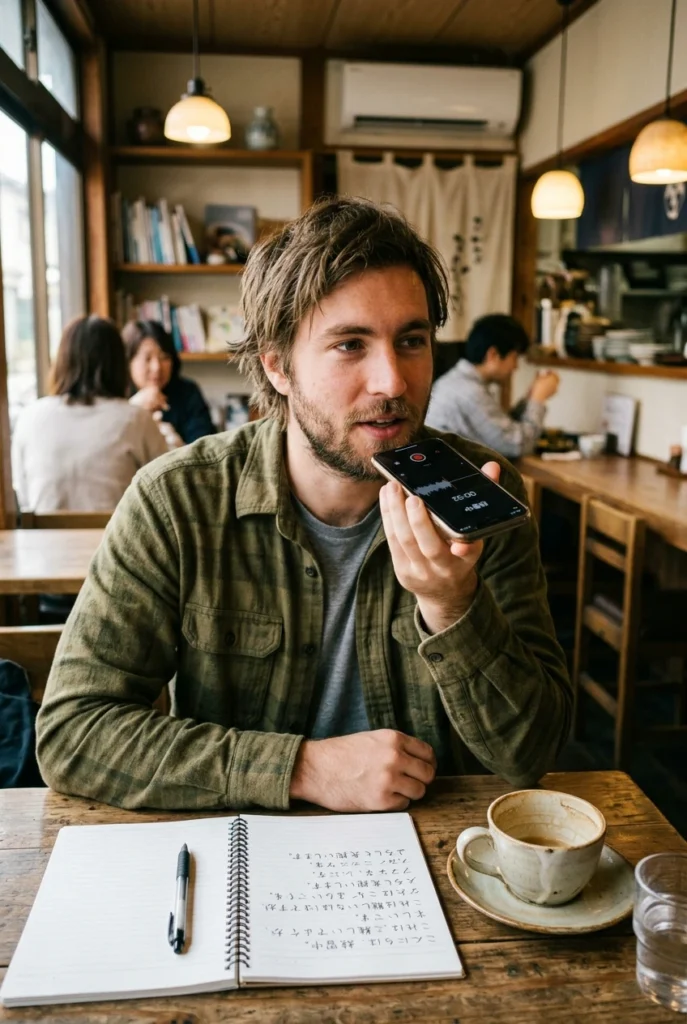
- Spend 60 minutes listening to native speakers say each phrase, then immediately repeating it yourself (this is called “shadowing” and it’s incredibly effective)
- Spend 40 minutes recording yourself saying the phrases and comparing your pronunciation to native speakers
- Spend 40 minutes practicing in front of a mirror, watching your mouth position and facial expressions (yes, this matters—warmth in your face comes through in your voice)
- Spend 40 minutes doing final comparison and refinement
Interactive learning tools are invaluable here—they let you hear pronunciation repeatedly and practice immediately without judgment.
Hours 32-40: Scenario Rehearsal
Now you’re going to mentally rehearse your actual trip using real scenarios with realistic dialogue.
Scenario 1: The Restaurant Experience (Full Dialogue)
You enter a ramen restaurant. The host says something in rapid Japanese. You smile and hold up one finger (universal for “one person”). They lead you to a seat.
The waiter comes over and speaks to you in Japanese. You smile confidently and say Sumimasen, kudasai while pointing at a bowl of ramen on the menu. The waiter nods and writes it down.
Five minutes later, you have your ramen. As they set it down, you say Arigatou gozaimasu with genuine warmth. The waiter smiles back.
Now run this scenario again. Say it out loud. Do it 5 times.
Scenario 2: The Lost Traveler (Full Dialogue)
You’re looking for your hotel but you’ve walked the wrong direction. You see a convenience store worker outside on a break. You approach confidently and say Sumimasen. They turn toward you.
You point to your hotel name (written down or on your phone) and ask Doko desu ka? (Where is it?) They point down the street and say something in Japanese. You say Wakarimashita and nod.
You smile, say Arigatou gozaimasu, and head in the direction they pointed.
Now run this scenario again, out loud. Do it 5 times.
Scenario 3: The Genuine Connection (Full Dialogue)
You’re browsing a small souvenir shop. The owner is behind the counter. You smile and say Konnichiwa. They light up and respond warmly.
You pick up an item, admire it, and ask Ikura desu ka? (How much?) They tell you the price. You repeat the number back to confirm. They nod.
You buy it. As they wrap it, you say Yoroshiku onegaishimasu (politely acknowledging their effort). They smile genuinely and say something warm in return.
You receive your item and say Arigatou gozaimasu with real gratitude. You leave with a genuine human connection—not just a transaction.
Now run this scenario 5 times, out loud.
Hours 40-48: Confidence Building & Last-Minute Review
The final 8 hours are about cementing everything and building unshakeable confidence.
Spend this time doing a final review of everything you’ve learned. But instead of looking at notes, practice the scenarios without any script. You’re improvising now. You’re testing yourself.
Go through your first day in Japan mentally, but this time do it with more realism. What if the waiter speaks too fast? You still say Wakarimashita and gesture for them to slow down. What if you forget a phrase? You point and smile—humans are remarkably good at communicating without perfect words.
The real breakthrough happens when you realize: Even if you forget every single phrase, you’ve got Sumimasen and a smile. That’s enough to navigate almost any situation. Everything else you’ve learned is a bonus that makes the experience richer.
Spend the final 4 hours relaxing. Watch a movie set in Japan. Look at photos of places you’ll visit. Build excitement. You’ve done the work. You’re ready.
What Actually Happens When You Arrive
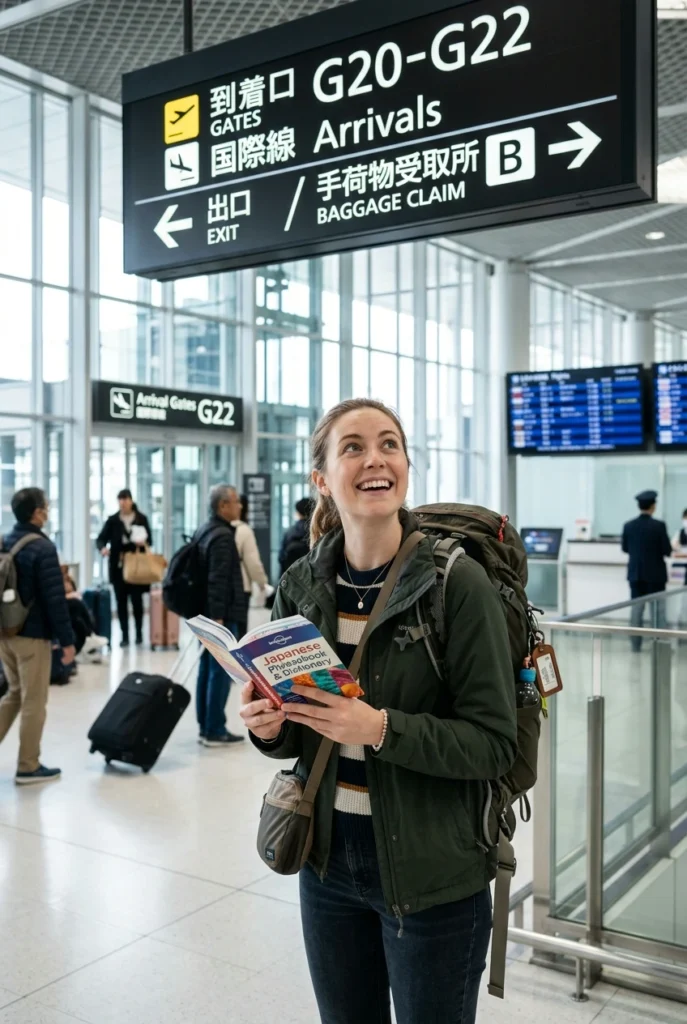
Here’s what people don’t tell you about arriving in Japan after a 48-hour crash course: it feels amazing.
You land. You get to your first restaurant. You say Sumimasen and point at your meal. The waiter smiles and nods. You just ordered food in a foreign country. That’s a win.
Later, you get a little lost. You ask someone Toire wa doko desu ka? and they point you in the right direction. You say Arigatou gozaimasu and mean it. You’re navigating a foreign city in a foreign language. That’s confidence.
By day two, something shifts. The phrases don’t feel like phrases anymore. They feel like normal communication. You’re not thinking about grammar or pronunciation—you’re just communicating. And it works.
More importantly, people respond to you differently. Because you’ve made the effort, they make the effort back. They slow down their speech. They gesture more clearly. They smile more. They want to help you. You’ve earned goodwill through genuine respect and effort.
Going Deeper (Optional)
After your trip, you might realize something: you actually like learning Japanese. The crash course opened a door. Maybe you want to learn more.
If that happens, there’s a world of deeper learning waiting for you. Understanding the phonetic alphabet (hiragana and katakana), learning numbers and counters, building actual conversational skills—it all becomes possible and enjoyable once you’ve had success with these foundational phrases.
For a more comprehensive understanding of Japanese phrases and how they work, this detailed guide covers 11 essential phrases plus pronunciation rules that deepen your understanding. But honestly? You don’t need it for your 48-hour crash course. You just needed this.
The Bottom Line: You’ve Got This
You don’t need months of study. You don’t need expensive apps or courses. You don’t need to become fluent before your trip.
What you need is strategy, focus, and 48 hours of concentrated effort. Learn the phrases that matter. Practice them until they’re automatic. Show up with confidence and genuine respect.
That’s the formula. That’s what works.
You’ve got a long weekend and a flight to Japan. You’ve got 48 hours to become functionally confident in another language. You’ve got this.
Now stop reading and start practicing.