

You’re standing in a Tokyo convenience store at 11 PM. Your stomach is growling. The cashier is staring at you expectantly. You point at something that looks vaguely edible. It turns out to be squid jerky. You bought squid jerky because you didn’t know how to say “I don’t understand” in Japanese.
This doesn’t have to be your story.
Here’s the thing about learning Japanese that most language apps won’t tell you: you don’t need to be fluent to have an incredible experience in Japan. You don’t even need 50 phrases or a semester of night classes. What you actually need is strategic precision—knowing exactly which 5 phrases will get you out of 90% of the situations that make travelers panic.
I’ve talked to thousands of people who’ve traveled to Japan. The ones who had the best experiences weren’t the ones with the largest vocabulary. They were the ones who had the right phrases at the right moment. And honestly? That’s a skill you can master in a weekend.
The Myth That’s Holding You Back
Let’s get real for a second. There’s this unspoken belief floating around that if you can’t have a full conversation in Japanese, you shouldn’t bother trying at all. So people show up in Kyoto or Osaka with zero Japanese, expecting English to carry them through—and it doesn’t.
The actual truth? Japanese people are incredibly patient with travelers who make genuine attempts. The cultural concept of omotenashi (wholehearted hospitality) means that locals respond overwhelmingly positively when you even try a few words. It’s not about perfection. It’s about respect and effort.
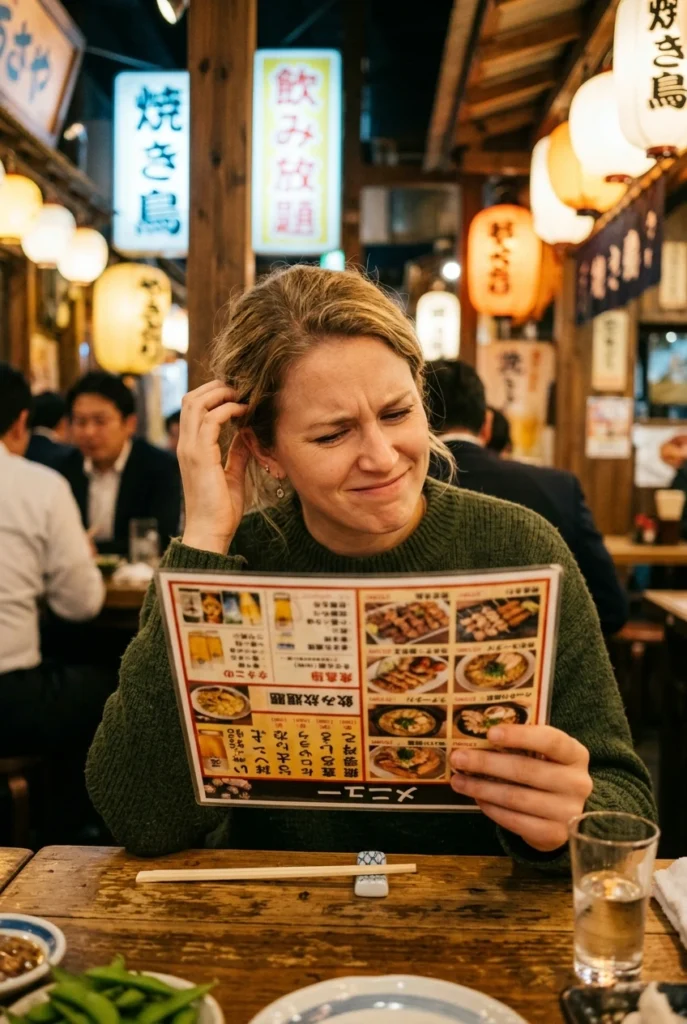
Here’s a statistic that might surprise you: Japan sees over 25 million international visitors annually, yet English fluency among the general population remains relatively low outside major tourist hubs like Tokyo and Osaka. Translation? Learning even 5 key phrases puts you ahead of most travelers and dramatically improves your day-to-day experience.
The difference between struggling and thriving in Japan often comes down to knowing when to deploy the right phrase at the right time.
The 5 Phrases That Will Solve 90% of Your Problems
These aren’t random words pulled from a textbook. These are the phrases that solve real problems: getting help, ordering food, understanding responses, and showing respect. Each one is a key that unlocks a different door.
1. Sumimasen (すみません)
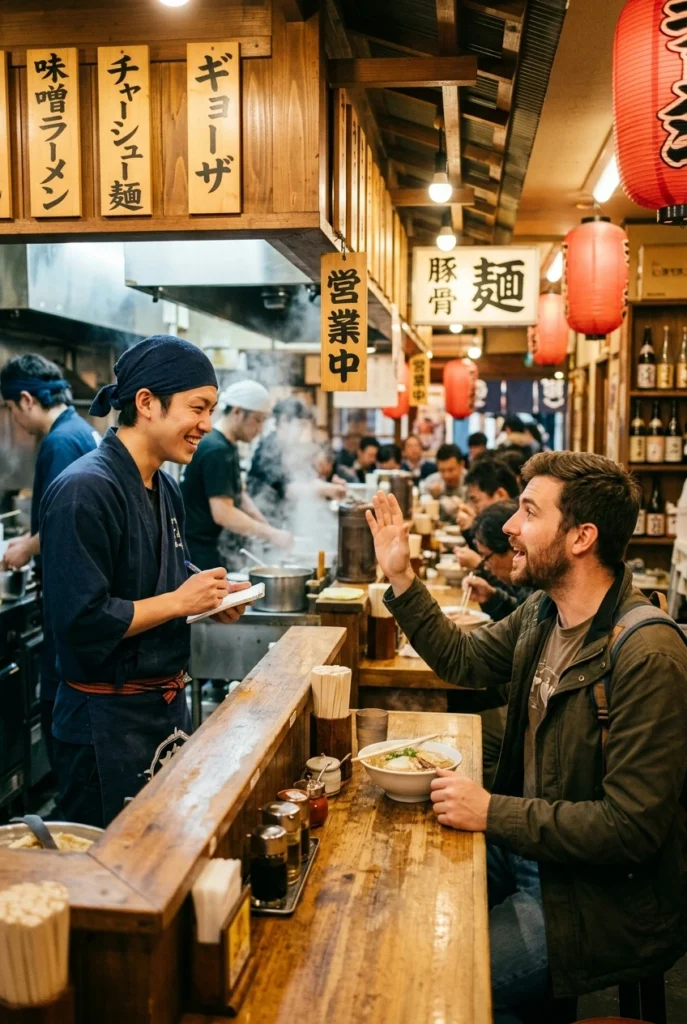
Let’s start with the MVP of Japanese phrases. Sumimasen literally means “I’m sorry,” but it’s so much more useful than that. It’s your magic wand for getting attention in crowded spaces.
Need the waiter? Sumimasen. Need to squeeze past someone on the train? Sumimasen. Need to ask a stranger for directions? Sumimasen. This single phrase is your gateway to getting help, and Japanese people respond to it instantly because it shows politeness and awareness of other people’s space.
The beauty of Sumimasen is that it buys you time. Once you’ve caught someone’s attention with it, you can point, gesture, or try your next phrase. It’s the opening move that makes everything else possible.
2. Arigatou gozaimasu (ありがとうございます)
This is your gratitude weapon. Arigatou gozaimasu is the polite form of “thank you,” and it’s going to be the most-used phrase on your entire trip.
Why? Because you’re going to say it constantly. The cashier hands you your change? Arigatou gozaimasu. Someone helps you find your train platform? Arigatou gozaimasu. A stranger gives you directions? Arigatou gozaimasu.
What makes this phrase so powerful is that it bridges a gap. It tells Japanese people that you’re not just taking—you’re acknowledging and appreciating their effort. That gratitude opens doors. People are more patient with travelers who say thank you. They offer more help. They smile more. It’s a phrase that compounds in value over your entire trip.
3. Kudasai (ください)
Now we get practical. Kudasai means “please give me,” and it’s your ordering phrase.
Point at something on a menu and say Kudasai, and you’ve ordered food. Point at a drink and say Kudasai, and you’ve got a beverage. It’s blunt and simple, but it works. Restaurants expect it. They understand it. There’s no ambiguity here.
The real power of Kudasai is that it’s your safety net when you can’t read or understand the menu. You don’t need to decode Japanese characters. You just point and say the word. Done.
4. Wakarimashita (わかりました)
Here’s where things get interesting. Wakarimashita means “I understand,” and it’s going to save you from awkward situations more times than you’d expect.
A train station attendant is giving you rapid-fire directions in Japanese? Say Wakarimashita. Someone is explaining which platform your train leaves from? Wakarimashita. A store owner is telling you about their products? Wakarimashita.
The magic here is that this phrase tells people you’re following along, which keeps them engaged and helpful instead of frustrated. It also gives you a moment to process what they said, figure out what they meant through context, and move forward. It’s a conversation bridge that prevents awkward silence.
5. Eigo wo hanasemasu ka? (英語を話せますか?)
Finally, your emergency exit. Eigo wo hanasemasu ka? means “Do you speak English?” and it’s your last resort when you’ve hit a communication wall.
Most young people in Japan speak some English. Many service workers speak basic English. By the time you ask this question, you’ve already shown politeness and effort, so even if they only speak a little English, they’re going to work harder to help you than if you’d started here.
The psychological shift matters here: by asking in Japanese first, you’ve demonstrated respect for their language and culture. That goodwill makes them more likely to help you, even if it’s in broken English.
How to Actually Use These Phrases (Not Just Memorize Them)
Having these phrases in your head is only half the battle. Using them naturally is where travelers fail.
The key difference between someone who gets stuck in situations and someone who glides through Japan is pronunciation and confidence. You could have perfect phrases, but if you mumble them or sound uncertain, people might not catch them.
When you say Sumimasen, make it clear. When you say Arigatou gozaimasu, put warmth into it. These aren’t whispered apologies—they’re confident interactions. Japanese people appreciate directness wrapped in politeness, and that’s exactly what these phrases deliver.
Here’s a practical tip: practice saying each phrase out loud multiple times before you land in Japan. Not in your head. Out loud. Your ear needs to hear the rhythm. Your mouth needs muscle memory. When you’re standing in that Tokyo convenience store at 11 PM again, you don’t want to be thinking about pronunciation—you want the words to come naturally.
This is why interactive learning tools are so valuable—they let you hear native pronunciation and practice repeatedly until the words feel automatic.
Real Scenarios Where These 5 Phrases Actually Save You
Scenario 1: Lost in Translation at a Restaurant
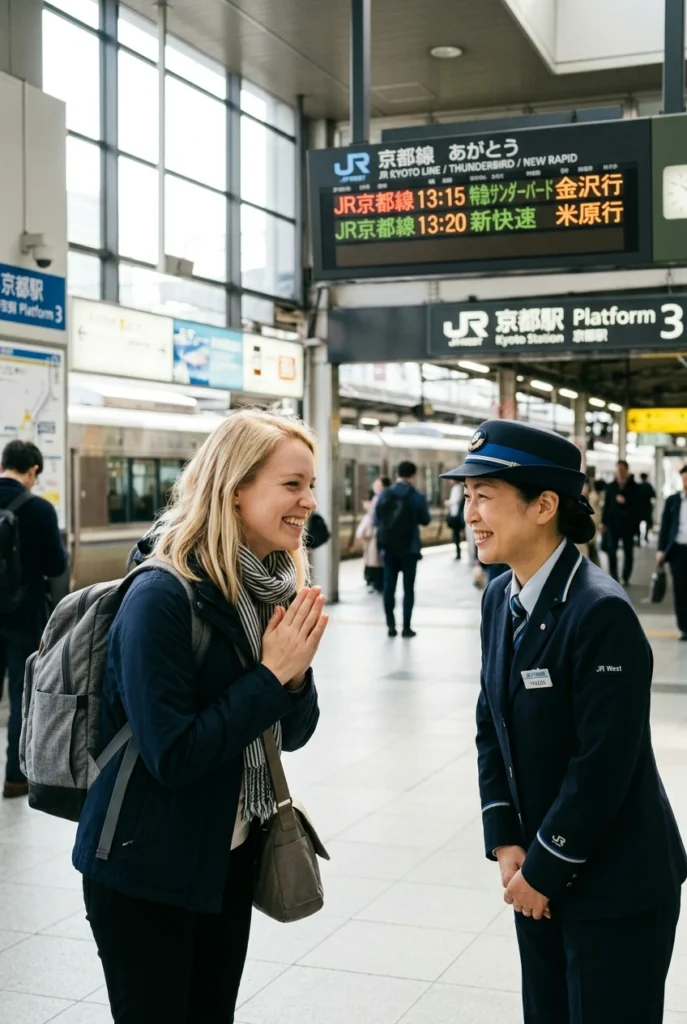
You’re hungry. You see a ramen shop. You point at the window display. The owner comes over. You say Sumimasen to get their attention, then point at the ramen and say Kudasai. They nod, you sit down, and 10 minutes later you have delicious ramen. No English needed.
Scenario 2: The Train Station Confusion
You need to get to a specific station but you’re not sure which platform. You find a station attendant and say Sumimasen. They turn to help. They rapidly explain the directions. You say Wakarimashita to let them know you’re following. They smile, point you in the right direction. You say Arigatou gozaimasu and you’re on your way.
Scenario 3: The Communication Breakdown
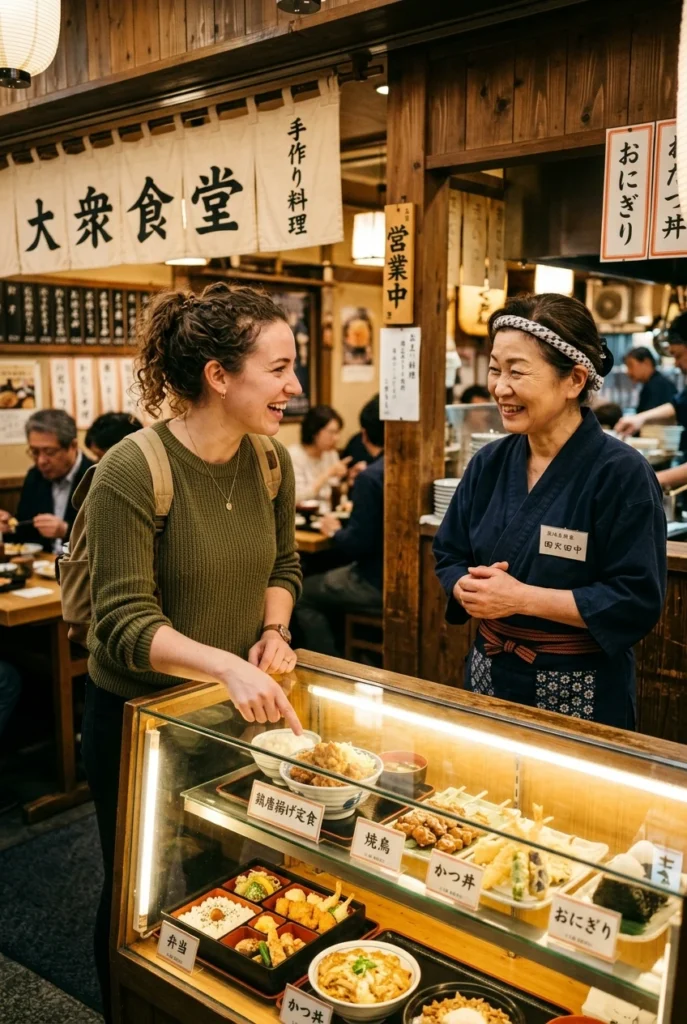
You’re trying to understand how much something costs or what something is made from. After a few failed attempts at gesturing, you ask Eigo wo hanasemasu ka? A coworker comes over, speaks to you in halting English, and suddenly everything makes sense.
The Gateway to Deeper Learning
Here’s something important: these 5 phrases aren’t the endpoint—they’re the starting line.
Once you realize that Japanese people respond positively to your effort, you’ll probably want to learn more. Maybe you’ll want to learn numbers so you can understand prices. Maybe you’ll want to learn basic greetings like Konnichiwa (hello) to make better first impressions with people you meet.
And if you want to go deeper, there’s a whole world of Japanese phrases and pronunciation rules that transform your experience from “surviving” to “thriving.” Places like this comprehensive guide to essential Japanese phrases break down all 11 core phrases plus pronunciation rules that make you sound more natural.
But here’s the truth: even just these 5 phrases will change your trip. You’ll navigate restaurants, get help when you need it, show respect, and have genuine interactions with Japanese people. You’ll go home with stories, not regrets about what you missed.

The Bottom Line
You don’t need to be fluent in Japanese to have an incredible experience. You need strategy. You need to know exactly which phrases solve your biggest problems, and you need to say them with confidence.
Learn these 5 phrases. Practice them until they feel automatic. Say them with warmth and respect. And watch how your entire Japan experience transforms.
The squid jerky story doesn’t have to be yours.